Showing posts with label bain. Show all posts

Wednesday, August 29, 2012

Mitt Romney Has More in Common With Old World French Aristocracy Than Patriotic Americans


Mitt Romney Has More in Common With Old World French Aristocracy Than Patriotic Americans

And this is where we get to the hypocrisy at the heart of Mitt Romney. Everyone knows that he is fantastically rich, having scored great success, the legend goes, as a "turnaround specialist," a shrewd financial operator who revived moribund companies as a high-priced consultant for a storied Wall Street private equity firm. But what most voters don't know is the way Mitt Romney actually made his fortune: by borrowing vast sums of money that other people were forced to pay back. This is the plain, stark reality that has somehow eluded America's top political journalists for two consecutive presidential campaigns: Mitt Romney is one of the greatest and most irresponsible debt creators of all time. In the past few decades, in fact, Romney has piled more debt onto more unsuspecting companies, written more gigantic checks that other people have to cover, than perhaps all but a handful of people on planet Earth.

By making debt the centerpiece of his campaign, Romney was making a calculated bluff of historic dimensions – placing a massive all-in bet on the rank incompetence of the American press corps. The result has been a brilliant comedy: A man makes a $250 million fortune loading up companies with debt and then extracting million-dollar fees from those same companies, in exchange for the generous service of telling them who needs to be fired in order to finance the debt payments he saddled them with in the first place. That same man then runs for president riding an image of children roasting on flames of debt, choosing as his running mate perhaps the only politician in America more pompous and self-righteous on the subject of the evils of borrowed money than the candidate himself. If Romney pulls off this whopper, you'll have to tip your hat to him: No one in history has ever successfully run for president riding this big of a lie. It's almost enough to make you think he really is qualified for the White House.

The unlikeliness of Romney's gambit isn't simply a reflection of his own artlessly unapologetic mindset – it stands as an emblem for the resiliency of the entire sociopathic Wall Street set he represents. Four years ago, the Mitt Romneys of the world nearly destroyed the global economy with their greed, shortsightedness and – most notably – wildly irresponsible use of debt in pursuit of personal profit. The sight was so disgusting that people everywhere were ready to drop an H-bomb on Lower Manhattan and bayonet the survivors. But today that same insane greed ethos, that same belief in the lunatic pursuit of instant borrowed millions – it's dusted itself off, it's had a shave and a shoeshine, and it's back out there running for president.

Mitt Romney, it turns out, is the perfect frontman for Wall Street's greed revolution. He's not a two-bit, shifty-eyed huckster like Lloyd Blankfein. He's not a sighing, eye-rolling, arrogant jerkwad like Jamie Dimon. But Mitt believes the same things those guys believe: He's been right with them on the front lines of the financialization revolution, a decades-long campaign in which the old, simple, let's-make-stuff-and-sell-it manufacturing economy was replaced with a new, highly complex, let's-take-stuff-and-trash-it financial economy. Instead of cars and airplanes, we built swaps, CDOs and other toxic financial products. Instead of building new companies from the ground up, we took out massive bank loans and used them to acquire existing firms, liquidating every asset in sight and leaving the target companies holding the note. The new borrow-and-conquer economy was morally sanctified by an almost religious faith in the grossly euphemistic concept of "creative destruction," and amounted to a total abdication of collective responsibility by America's rich, whose new thing was making assloads of money in ever-shorter campaigns of economic conquest, sending the proceeds offshore, and shrugging as the great towns and factories their parents and grandparents built were shuttered and boarded up, crushed by a true prairie fire of debt.

Mitt Romney – a man whose own father built cars and nurtured communities, and was one of the old-school industrial anachronisms pushed aside by the new generation's wealth grab – has emerged now to sell this make-nothing, take-everything, screw-everyone ethos to the world. He's Gordon Gekko, but a new and improved version, with better PR – and a bigger goal. A takeover artist all his life, Romney is now trying to take over America itself. And if his own history is any guide, we'll all end up paying for the acquisition.

Willard "Mitt" Romney's background in many ways suggests a man who was born to be president – disgustingly rich from birth, raised in prep schools, no early exposure to minorities outside of maids, a powerful daddy to clean up his missteps, and timely exemptions from military service. In Romney's bio there are some eerie early-life similarities to other recent presidential figures. (Is America really ready for another Republican president who was a prep-school cheerleader?) And like other great presidential double-talkers such as Bill Clinton and George W. Bush, Romney has shown particular aptitude in the area of telling multiple factual versions of his own life story.

"I longed in many respects to actually be in Vietnam and be representing our country there," he claimed years after the war. To a different audience, he said, "I was not planning on signing up for the military. It was not my desire to go off and serve in Vietnam."

Like John F. Kennedy and George W. Bush, men whose way into power was smoothed by celebrity fathers but who rebelled against their parental legacy as mature politicians, Mitt Romney's career has been both a tribute to and a repudiation of his famous father. George Romney in the 1950s became CEO of American Motors Corp., made a modest fortune betting on energy efficiency in an age of gas guzzlers and ended up serving as governor of the state of Michigan only two generations removed from the Romney clan's tradition of polygamy. For Mitt, who grew up worshipping his tall, craggily handsome, politically moderate father, life was less rocky: Cranbrook prep school in suburban Detroit, followed by Stanford in the Sixties, a missionary term in which he spent two and a half years trying (as he said) to persuade the French to "give up your wine," and Harvard Business School in the Seventies. Then, faced with making a career choice, Mitt chose an odd one: Already married and a father of two, he left Harvard and eschewed both politics and the law to enter the at-the-time unsexy world of financial consulting.

"When you get out of a place like Harvard, you can do anything – at least in the old days you could," says a prominent corporate lawyer on Wall Street who is familiar with Romney's career. "But he comes out, he not only has a Harvard Business School degree, he's got a national pedigree with his name. He could have done anything – but what does he do? He says, 'I'm going to spend my life loading up distressed companies with debt.'?"

Romney started off at the Boston Consulting Group, where he showed an aptitude for crunching numbers and glad-handing clients. Then, in 1977, he joined a young entrepreneur named Bill Bain at a firm called Bain & Company, where he worked for six years before being handed the reins of a new firm-within-a-firm called Bain Capital.

In Romney's version of the tale, Bain Capital – which evolved into what is today known as a private equity firm – specialized in turning around moribund companies (Romney even wrote a book called Turnaround that complements his other nauseatingly self-complimentary book, No Apology) and helped create the Staples office-supply chain. On the campaign trail, Romney relentlessly trades on his own self-perpetuated reputation as a kind of altruistic rescuer of failing enterprises, never missing an opportunity to use the word "help" or "helped" in his description of what he and Bain did for companies. He might, for instance, describe himself as having been "deeply involved in helping other businesses" or say he "helped create tens of thousands of jobs."

The reality is that toward the middle of his career at Bain, Romney made a fateful strategic decision: He moved away from creating companies like Staples through venture capital schemes, and toward a business model that involved borrowing huge sums of money to take over existing firms, then extracting value from them by force. He decided, as he later put it, that "there's a lot greater risk in a startup than there is in acquiring an existing company." In the Eighties, when Romney made this move, this form of financial piracy became known as a leveraged buyout, and it achieved iconic status thanks to Gordon Gekko in Wall Street. Gekko's business strategy was essentially identical to the Romney–Bain model, only Gekko called himself a "liberator" of companies instead of a "helper."

Here's how Romney would go about "liberating" a company: A private equity firm like Bain typically seeks out floundering businesses with good cash flows. It then puts down a relatively small amount of its own money and runs to a big bank like Goldman Sachs or Citigroup for the rest of the financing. (Most leveraged buyouts are financed with 60 to 90 percent borrowed cash.) The takeover firm then uses that borrowed money to buy a controlling stake in the target company, either with or without its consent. When an LBO is done without the consent of the target, it's called a hostile takeover; such thrilling acts of corporate piracy were made legend in the Eighties, most notably the 1988 attack by notorious corporate raiders Kohlberg Kravis Roberts against RJR Nabisco, a deal memorialized in the book Barbarians at the Gate.

Romney and Bain avoided the hostile approach, preferring to secure the cooperation of their takeover targets by buying off a company's management with lucrative bonuses. Once management is on board, the rest is just math. So if the target company is worth $500 million, Bain might put down $20 million of its own cash, then borrow $350 million from an investment bank to take over a controlling stake.

But here's the catch. When Bain borrows all of that money from the bank, it's the target company that ends up on the hook for all of the debt.

Now your troubled firm – let's say you make tricycles in Alabama – has been taken over by a bunch of slick Wall Street dudes who kicked in as little as five percent as a down payment. So in addition to whatever problems you had before, Tricycle Inc. now owes Goldman or Citigroup $350 million. With all that new debt service to pay, the company's bottom line is suddenly untenable: You almost have to start firing people immediately just to get your costs down to a manageable level.

"That interest," says Lynn Turner, former chief accountant of the Securities and Exchange Commission, "just sucks the profit out of the company."

Fortunately, the geniuses at Bain who now run the place are there to help tell you whom to fire. And for the service it performs cutting your company's costs to help you pay off the massive debt that it, Bain, saddled your company with in the first place, Bain naturally charges a management fee, typically millions of dollars a year. So Tricycle Inc. now has two gigantic new burdens it never had before Bain Capital stepped into the picture: tens of millions in annual debt service, and millions more in "management fees." Since the initial acquisition of Tricycle Inc. was probably greased by promising the company's upper management lucrative bonuses, all that pain inevitably comes out of just one place: the benefits and payroll of the hourly workforce.

Once all that debt is added, one of two things can happen. The company can fire workers and slash benefits to pay off all its new obligations to Goldman Sachs and Bain, leaving it ripe to be resold by Bain at a huge profit. Or it can go bankrupt – this happens after about seven percent of all private equity buyouts – leaving behind one or more shuttered factory towns. Either way, Bain wins. By power-sucking cash value from even the most rapidly dying firms, private equity raiders like Bain almost always get their cash out before a target goes belly up.

This business model wasn't really "helping," of course – and it wasn't new. Fans of mob movies will recognize what's known as the "bust-out," in which a gangster takes over a restaurant or sporting goods store and then monetizes his investment by running up giant debts on the company's credit line. (Think Paulie buying all those cases of Cutty Sark in Goodfellas.) When the note comes due, the mobster simply torches the restaurant and collects the insurance money. Reduced to their most basic level, the leveraged buyouts engineered by Romney followed exactly the same business model. "It's the bust-out," one Wall Street trader says with a laugh. "That's all it is."

Private equity firms aren't necessarily evil by definition. There are many stories of successful turnarounds fueled by private equity, often involving multiple floundering businesses that are rolled into a single entity, eliminating duplicative overhead. Experian, the giant credit-rating tyrant, was acquired by Bain in the Nineties and went on to become an industry leader.

But there's a key difference between private equity firms and the businesses that were America's original industrial cornerstones, like the elder Romney's AMC. Everyone had a stake in the success of those old businesses, which spread prosperity by putting people to work. But even private equity's most enthusiastic adherents have difficulty explaining its benefit to society. Marc Wolpow, a former Bain colleague of Romney's, told reporters during Mitt's first Senate run that Romney erred in trying to sell his business as good for everyone. "I believed he was making a mistake by framing himself as a job creator," said Wolpow. "That was not his or Bain's or the industry's primary objective. The objective of the LBO business is maximizing returns for investors." When it comes to private equity, American workers – not to mention their families and communities – simply don't enter into the equation.

What is the difference between the way Romney and the European aristocracy of the 17th century and earlier. Romney and his followers do not believe in honest rewards for honest goods and services rendered they believe that all the GDP produced by American workers is due them because they are the entitled elite. Sure they'll throw the peasants a a few crumbs, they have to make it look like the system is kind of working and if its not, its your fault. Yet no pain caused to working class Americans is Romney and the elites fault. Funny how that works. 12 Tax-Dodging Corporations Spent $1 Billion To Influence Washington Over The Last Decade

Why Mitt Romney Is a Threat to Women’s Health

6 Big Lies By Republican National Convention Speakers, Day One

Mitt Doesn’t Care About Your ‘Facts’


Tuesday, July 24, 2012

President Obama Was Right About Business, When Will Romney Show Some Integrity and Apologize


President Obama Was Right About Business, When Will Romney  Show Some Integrity and Apologize

The Obama campaign pushed back against Mitt Romney’s ad that distorts the “you didn’t build that” line in a new web video featuring deputy campaign manager Stephanie Cutter. The Romney campaign took Obama’s comments about infrastructure out of context and have used it on the stump and now in a new ad to push the point that Obama doesn’t believe in small business owners.

In their new video, Cutter compares Romney and Obama’s plans to help small businesses. Cutter then brings up Romney’s history at Bain Capital, where he negotiated $10 million in debt forgiveness from the FDIC. “Ironically, Mitt Romney knows better than anyone that business can’t always do it alone,”

Myth Busters: The Republican Narrative About Taxes, Business and The Market is a Lie

When it comes to the economy, too many Americans continue to be numbed by the soothing sounds of conservative spin in the media. Here are three of their more inventive claims:

1. Higher taxes on the rich will hurt small businesses and discourage job creators

A recent Treasury analysis found that only 2.5% of small businesses would face higher taxes from the expiration of the Bush tax cuts.

As for job creation, it's not coming from the people with money. Over 90% of the assets owned by millionaires are held in a combination of low-risk investments (bonds and cash), the stock market, real estate, and personal business accounts. Angel investing (capital provided by affluent individuals for business start-ups) accounted for less than 1% of the investable assets of high net worth individuals in North America in 2011. The Mendelsohn Affluent Survey agreed that the very rich spend less than two percent of their money on new business startups.

The Wall Street Journal noted, in way of confirmation, that the extra wealth created by the Bush tax cuts led to the "worst track record for jobs in recorded history."

2. Individual initiative is all you need for success.

President Obama was criticized for a speech which included these words: "If you've been successful, you didn't get there on your own...when we succeed, we succeed because of our individual initiative, but also because we do things together."

'Together' is the word that winner-take-all conservatives seem to forget. Even the richest and arguably most successful American, Bill Gates, owes most of his good fortune to the thousands of software and hardware designers who shaped the technological industry over a half-century or more. A careful analysis of his rise shows that he had luck, networking skills, and a timely sense of opportunism, even to the point of taking the work of competitors and adapting it as his own.

Gates was preceded by numerous illustrious Americans who are considered individual innovators when in fact they used their skills to build upon the work of others. On the day that Alexander Graham Bell filed for a patent for his telephone, electrical engineer Elisha Gray was filing an intent to patent a similar device. Both had built upon the work of Antonio Meucci, who didn't have the fee to file for a patent. Thomas Edison's incandescent light bulb was the culmination of almost 40 years of work by other fellow light bulb developers. Samuel Morse, Eli Whitney, the Wright brothers, and even Thomas Edison had, as eloquently stated by Jared Diamond, "capable predecessors...and made their improvements at a time when society was capable of using their product."

If anything, it's harder than ever today to ascend through the ranks on one's own. As summarized in the Pew research report "Pursuing the American Dream," only 4% of those starting out in the bottom quintile make it to the top quintile as adults, "confirming that the 'rags-to-riches' story is more often found in Hollywood than in reality."

3. A booming stock market is good for all of us

The news reports would have us believe that happy days are here again when the stock market goes up. But as the market rises, most Americans are getting a smaller slice of the pie.

In a recent Newsweek article, author Daniel Gross gushed that "The stock market has doubled since March 2009, while corporate profits and exports have surged to records."

But the richest 10% of Americans own over 80% of the stock market. What Mr. Gross referred to as the "democratization of the stock market" is actually, as demonstrated by economist Edward Wolff, a distribution of financial wealth among just the richest 5% of Americans, those earning an average of $500,000 per year.

Thanks in good part to a meager 15% capital gains tax, the richest 400 taxpayers DOUBLED their income and nearly HALVED their tax rates in just seven years (2001-2007). So dramatic is the effect that anyone making more than $34,500 a year in salary and wages is taxed at a higher rate than an individual with millions in capital gains.

There's yet more to the madness. The stock market has grown much faster than the GDP over the past century, which means that this special tax rate is being given to people who already own most of the unearned income that keeps expanding faster than the productiveness of real workers.

And one fading illusion: People in the highest class are people of high class.

Scientific American and Psychological Science have both reported that wealthier people are more focused on self, and have less empathy for people unlike themselves.

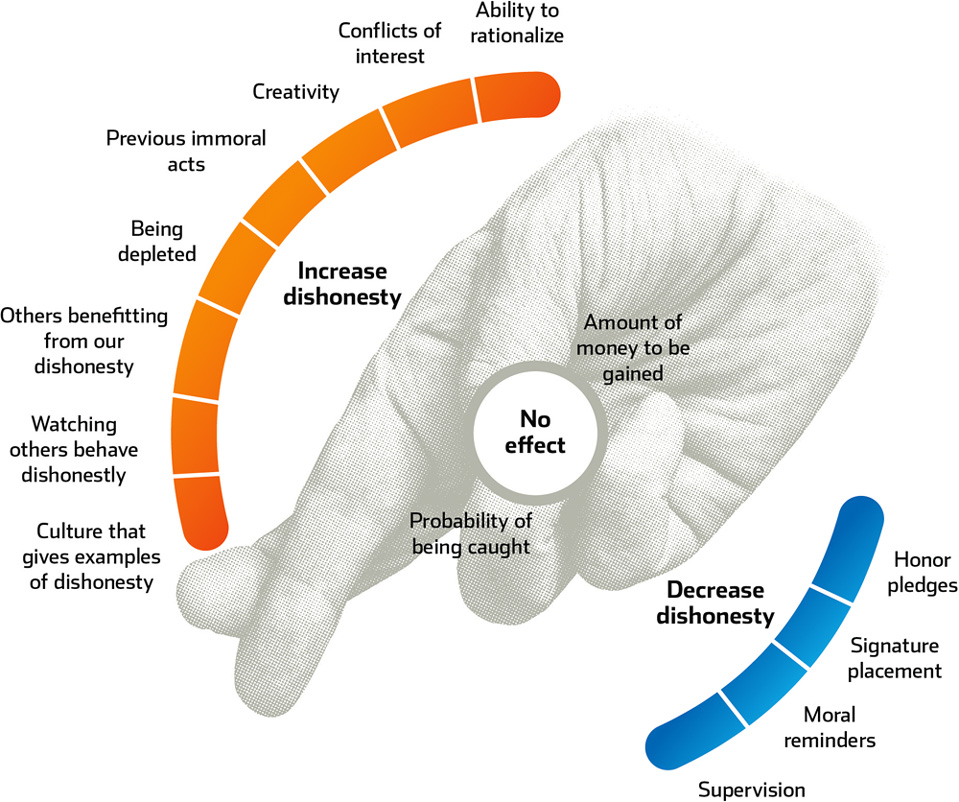
This sense of self-interest, according to a study published in the Proceedings of the National Academy of Sciences and other sources, promotes wrongdoing and unethical behavior.

Can't help but think about bankers and hedge fund managers.

Its called voodoo economics for a reason. The relentless march of tyrannical conservatives have, over the last forty years, eroded the very things that created the middle-class during the New Deal. The future is bleak. One in which we have the rich living on the hill and half or more of Americans barely getting by. For those who can scrap together the money and get a highly specialized degree in medicine or engineering, the wealthy, who only know how to manipulate numbers on a spread sheet, need you to take care of them and create their products. The middle will be gone. Welcome to the land of dog-eat-dog economics.

Star of Romney ‘My Hands Didn’t Build This’ Ad Received Millions in Government Loans and Contracts

Sunday, July 22, 2012

The Key to Understanding Mitt Romney - He Has Never Earned an Honest Dollar or Done an Honest Day's Work


The Key to Understanding Mitt Romney - He Has Never Earned an Honest Dollar or Done an Honest Day's Work

A splendid accidental benefit of this year’s Republican presidential primary is that one of the most abusive dark corners of American capitalism, so-called private equity, is coming in for belated scrutiny and scorn. Delectably, the disclosures and criticisms are coming from leading Republicans, in a blatant undermining of cherished Republican ideology. Even before Democrats lay a glove on Romney, he will be assaulted by an investigative documentary that is more Michael Moore than Adam Smith. In politics, it doesn’t get much better than this.

“Private equity” was rebranded in the 1990s. It used to be called, more honestly, leveraged buyouts. While the job-killing aspect of many of the deals done by Mitt Romney’s Bain Capital and kindred financial engineers has come in for withering criticism, that is only one part of the mischief.

The phrase “private equity” conjures up images of venture capitalists pooling their funds and backing promising new ventures or contributing new equity and new management to companies in need of restructuring. But that is not how the game really works most of the time. Typically, private-equity companies borrow a ton of money, sometimes in collusion with incumbent management and sometimes in opposition to it, and take a company private. That is, the company’s shares are no longer publicly traded.

This maneuver has several advantages to the new owners. First, despite the picture of investors putting in equity, most of the money is usually borrowed. That produces a huge tax break, since the interest is tax-deductible. Second, the new owners can pay themselves large management fees as well as “special dividends.” Typically, they take out far more than they put in, by incurring debts carried on the books of the operating company.

For instance, when Bain masterminded a private-equity deal for HCA, one of America’s largest for-profit hospital chains (which has gone from private to public twice and which paid a multibillion-dollar fine for defrauding Medicare), Bain paid itself a management fee of $58 million, even though it had only put up 6.3 percent of the buyout fund.

Another big plus: The main regulatory principle protecting investors and by extension, the system as a whole, is disclosure. Under the securities laws administered by the Securities and Exchange Commission, management must disclose information deemed “material” to the interests of the investing public, including salaries, earnings, losses, assets, liabilities, and risks. But these laws flow from the fact that a corporation’s shares are publicly traded. A company owner by a private-equity outfit like Bain can operate completely in the shadows.

Then, there are three possible ways to cash in.  If the company turns out to be a success, like Staples (one of Bain’s big winners), the private-equity owners can take their legitimate share of the reward. But that turns out to be the exception. If the company, newly loaded up with debt, starts to falter, it can be broken up, with massive layoffs and cuts in health and pension benefits, and resold, usually at a profit for the private-equity owners.

Or the company can simply declare bankruptcy under Chapter 11 and shed its debts. Normally, shareholders think twice about incurring risks that could result in  bankruptcy, because one of the consequences is that the stock becomes worthless. But private-equity owners typically have already made their bundle on management fees and special dividend payouts, so even if the operating company goes bankrupt, they are still in the money.

And all of this is legal.

Oddly, as one abuse after another was exposed following the financial collapse, the predations of private equity have sailed merrily on. There is a terrific 2009 book on the subject, which I reviewed for the Prospect, Josh Kosman’s The Buyout of America. Read Kosman, and you will learn chapter and verse about how Bain, Carlyle, Blackstone, Texas Pacific Group, and the others plunder operating companies with taxpayer subsidies thanks to the borrowed money.

Among the tales Kosman tells: Thomas H. Lee Partners buys Warner Music, the world's fourth-biggest music company, and loads up the company with debt to finance the buyout and to pay itself $1.2 billion in dividends. One-third of the workforce is fired. CD&R, The Carlyle Group, and Merrill Lynch buy Hertz, the nation's largest auto-rental company, putting up just $2.3 billion in cash out of a $15 billion deal. The private-equity owners quickly recoup more than half of their down payment by loading up the company with even more debt. Funds for rental operations are cut by 39 percent, and Hertz's market share falls. In another example, Bain Capital, the company that made Mitt Romney rich, invests just $18.5 million in KB Toys, extracts $85 million in dividends, then takes the company into bankruptcy, stiffing employees, investors, and creditors.

The media, especially Fox News and Anti-American mogul Rupert Murdoch's many newspapers, keep telling us that Romney and his elite business elite take risks. When a nurse or carpenter leaves for work in the morning they take more risks in one day than Romney has his entire life. What private equity does guarantees a profit almost no matter what happens. On top of that the taxes the nurse and carpenter pay subsidize Romney's crony capitalism. During the primaries some Republicans had the nerve to speck the truth about Romney. They have all since drink the kool-aid and behave like good little well trained mice,

Here are the top 10 comments about Bain from Romney’s Republican rivals:

    1. “The idea that you’ve got private equity companies that come in and take companies apart so they can make profits and have people lose their jobs, that’s not what the Republican Party’s about.” — Rick Perry [New York Times, 1/12/12]

    2. “The Bain model is to go in at a very low price, borrow an immense amount of money, pay Bain an immense amount of money and leave. I’ll let you decide if that’s really good capitalism. I think that’s exploitation.” — Newt Gingrich [New York Times, 1/17/12]

    3. “Instead of trying to work with them to try to find a way to keep the jobs and to get them back on their feet, it’s all about how much money can we make, how quick can we make it, and then get out of town and find the next carcass to feed upon” — Rick Perry [National Journal, 1/10/12]

    4. “We find it pretty hard to justify rich people figuring out clever legal ways to loot a company, leaving behind 1,700 families without a job.” — Newt Gingrich [Globe and Mail, 1/9/12]

    5. “Now, I have no doubt Mitt Romney was worried about pink slips — whether he was going to have enough of them to hand out because his company, Bain Capital, of all the jobs that they killed” — Rick Perry [New York Times, 1/9/12]

    6) “He claims he created 100,000 jobs. The Washington Post, two days ago, reported in their fact check column that he gets three Pinocchios. Now, a Pinocchio is what you get from The Post if you’re not telling the truth.” — Newt Gingrich [1/13/12, NBC News]

    7. “There is something inherently wrong when getting rich off failure and sticking it to someone else is how you do your business, and I happen to think that’s indefensible” — Rick Perry [National Journal, 1/10/12]

    8. “If Governor Romney would like to give back all the money he’s earned from bankrupting companies and laying off employees over his years, then I would be glad to then listen to him” — Newt Gingrich [Mediaite, 12/14/11]

    9. “If you’re a victim of Bain Capital’s downsizing, it’s the ultimate insult for Mitt Romney to come to South Carolina and tell you he feels your pain, because he caused it.” — Rick Perry [New York Times, 1/8/12]

    10. “They’re vultures that sitting out there on the tree limb waiting for the company to get sick and then they swoop in, they eat the carcass. They leave with that and they leave the skeleton” — Rick Perry [National Journal, 1/10/12]


Romney is not so much running for president based on his accomplishments or ideas ( he has none of either) , he is simply telling the nation he deserves to be president because he is so special.

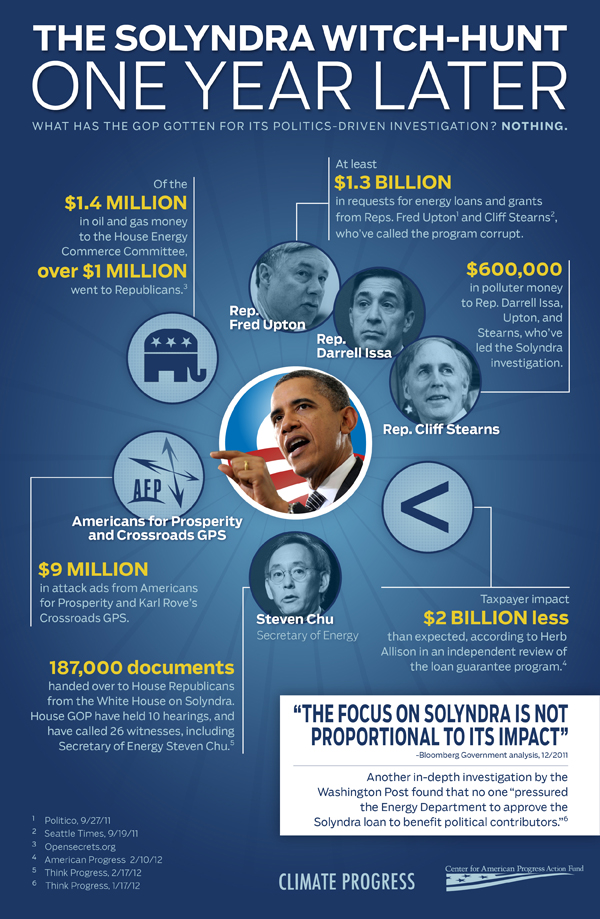
Exclusive Timeline: Bush Administration Advanced Solyndra Loan Guarantee for Two Years, Media Blow the Story. Republicans have been trying desperately to pin a scandal on President Obama for going on four years. They can't find anything so they just make stuff up. So much for morality and values.

The Moral Corruption of Conservative Republicans Seems To Have No Limits


Mitt’s Offshore Shenanigans: The Bigger Story

Mitt Romney morphs into Conservative Republican Pervert James O'Keefe,  To Release Misleadingly Edited Obama Video As An Ad

Monday, July 16, 2012

Myth Busters: The Super Wealthy and Big Business Are America's Biggest Welfare Queens


Myth Busters: The Super Wealthy and Big Business Are America's Biggest Welfare Queens

Wealthy individuals and corporations want us to believe they've made it on their own, without the help of government or the American people. Billionaire financier Sanford Weill blustered, "We didn't rely on somebody else to build what we built." He was echoing the words of his famous predecessor, the formidable financier J. P. Morgan, who spouted, "I owe the public nothing."

That's the bull of Wall Street. There are at least five good reasons why the wealthiest Americans need government as much as the rest of us, and probably more.

1. Security

In his "People's History," Howard Zinn described colonial opposition to inequality in 1765: "A shoemaker named Ebenezer Macintosh led a mob in destroying the house of a rich Boston merchant named Andrew Oliver. Two weeks later, the crowd turned to the home of Thomas Hutchinson, symbol of the rich elite who ruled the colonies in the name of England. They smashed up his house with axes, drank the wine in his wine cellar, and looted the house of its furniture and other objects. A report by colony officials to England said that this was part of a larger scheme in which the houses of fifteen rich people were to be destroyed, as part of 'a war of plunder, of general levelling and taking away the distinction of rich and poor.'"

That doesn't happen much anymore. Of course, the super-rich aren't taking any chances, with panic shelters and James Bond cars and personal surveillance drones. But the U.S. government will be helping them by spending $55 billion on Homeland Security next year, in addition to $673 billion for the military. The police, emergency services, and National Guard are trained to focus on crimes against wealth.

In the cities, business interests keep the police focused on the homeless and unemployed. And on drug users. A "Broken Windows" mentality, which promotes quick fixes of minor damage to discourage large-scale destruction, is being applied to human beings. Wealthy Americans can rest better at night knowing that the police are "stopping and frisking" in the streets of the poor neighborhoods.

2. Laws and Deregulations

The wealthiest Americans are the main beneficiaries of tax laws, property rights, zoning rules, patent and copyright provisions, trade pacts, antitrust legislation, and contract regulations. Tax loopholes allow them to store over $1 trillion in assets overseas.

Their companies benefit, despite any publicly voiced objections to regulatory agencies, from SBA and SEC guidelines that generally favor business, and from FDA and USDA quality control measures that minimize consumer complaints and product recalls.

The growing numbers of financial industry executives have profited from 30 years of deregulation, most notably the repeal of the Glass-Steagall Act. Lobbying by the financial industry has prolonged the absurdity of a zero sales tax on financial transactions.

Big advantages accrue for multinational corporations from trade agreements like NAFTA, with international disputes resolved by the business-friendly World Bank, International Monetary Fund, and World Trade Organization. Federal judicial law protects our biggest companies from foreign infringement. The proposed Trans-Pacific Partnership would put governments around the world at the mercy of corporate decision-makers.

The euphemistically named JOBS Act further empowers business, exempting startups from regulatory accounting requirements.

There are even anti-antitrust measures, such as the licensing rules that allow the American Medical Association to restrict the number of doctors in the U.S., thereby keeping doctor salaries artificially high. Can't have a free market if it hurts business.

3. Research and Infrastructure

A publicly supported communications infrastructure allows the richest 10% of Americans to manipulate their 80% share of the stock market. CEOs rely on roads and seaports and airports to ship their products, the FAA and TSA and Coast Guard and Department of Transportation to safeguard them, a nationwide energy grid to power their factories, and communications towers and satellites to conduct online business. Private jets use 16 percent of air traffic control resources while paying only 3% of the bill.

Perhaps most important to business, even as it focuses on short-term profits, is the long-term basic research that is largely conducted with government money. Especially for the tech industry. Taxpayer-funded research at the Defense Advanced Research Projects Agency (the Internet) and the National Science Foundation (the Digital Library Initiative) has laid a half-century foundation for technological product development. Well into the 1980s, as companies like Apple and Google and Microsoft and Oracle and Cisco profited from the fastest-growing product revolution in American history, the U.S. Government was still providing half the research funds. Even today 60% of university research is government-supported.

Public schools have helped to train the chemists, physicists, chip designers, programmers, engineers, production line workers, market analysts, and testers who create modern technological devices. They, in turn, can't succeed without public layers of medical support and security. All of them contribute to the final product.

As the super-rich ride in their military-designed armored cars to a financial center globally connected by public fiber optics networks to make a trade guided by publicly funded data mining and artificial intelligence software, they might stop and re-think the old Horatio Alger myth.

4. Subsidies

The traditional image of 'welfare' pales in comparison to corporate welfare and millionaire welfare. Whereas over 90% of Temporary Assistance for Needy Families goes to the elderly, the disabled, or working households, most of the annual $1.3 trillion in "tax expenditures" (tax subsidies from special deductions, exemptions, exclusions, credits, and loopholes) goes to the top quintile of taxpayers. One estimate is $250 billion a year just to the richest 1%.

Senator Tom Coburn's website reports that mortgage interest and rental expense deductions alone return almost $100 billion a year to millionaires.

The most profitable corporations get the biggest subsidies. The Federal Reserve provided more than $16 trillion in financial assistance to financial institutions and corporations. According to Citizens for Tax Justice, 280 profitable Fortune 500 companies, which together paid only half of the maximum 35 percent corporate tax rate, received $223 billion in tax subsidies.

Even the conservative Cato Institute admitted that the U.S. federal government spent $92 billion on corporate welfare during fiscal year 2006. Recipients included Boeing, Xerox, IBM, Motorola, Dow Chemical, and General Electric.

In agriculture, most of the funding for commodity programs goes to large agribusiness corporations such as Archer Daniels Midland. For the oil industry, estimates of subsidy payments range from $10 to $50 billion per year.

5. Disaster Costs

Exxon spokesperson Ken Cohen once said: "Any claim we don't pay taxes is absurd...ExxonMobil is a leading U.S. taxpayer." Added Chevron CEO John Watson: "The oil and gas industry pays its fair share in taxes" But SEC documents show that Exxon paid 2% in U.S. federal taxes from 2008 to 2010, Chevron 4.8%.

As if to double up on the insult, the petroleum industry readily takes public money for oil spills. Cleanups cost much more than the fines imposed on the companies. Government costs can run into the billions, or even tens of billions, of dollars.

Another disaster-prone industry is finance, from which came the encouraging words of Goldman Sachs chairman Lloyd Blankfein: "Everybody should be, frankly, happy...the financial system led us into the crisis and it will lead us out."

Estimates for bailout funds from the Treasury and the Federal Reserve range between $3 trillion and $5 trillion. That's enough to pay off both the deficit and next year's entitlement costs. All because of the irresponsibility of the super-salaried CEOs of our most profitable corporations.

Common Sense

Patriotic Millionaires recently addressed the President and Congress: "Given the dire state of our economy, it is absurd that one-quarter of all millionaires pay a lower tax rate than millions of working, middle-class American families...Please do the right thing for our country. Raise our taxes."

It's good to know somebody gets it right. Taxes, for the most part, are not unfair. They represent payment for society's many benefits, which get bigger and better as people get richer.

Paul Buchheit is a college teacher, an active member of US Uncut Chicago, founder and developer of social justice and educational websites (UsAgainstGreed.org, PayUpNow.org, RappingHistory.org),


Conservatives are in perpetual paranoia mode about someone getting a few dollars for food - that conservatives with supernatural extrasensory perception are sure they do not deserve. Yet billions, even trillions of unearned income go into the pockets of the elite. Conservatives and the elite ( not all wealthy people are elites to be fair) feel that we should all be down on our knees praising these thieves.

Mitt Romney plans on resurrecting the worse policies of the Bush administration. For those with a short memory, Bush was our first MBA (Masters of Business Administration) president - Whorehouse Morals and Business Ethics

Economists: Romney’s Plan Would Spark a New Recession


Saturday, July 14, 2012

Mitt Romney Cannot See Past His Supreme Arrogance To Apologize To President Obama and The American People


Mitt Romney Cannot See Past His Supreme Arrogance To Apologize To President Obama and The American People

It was hidden in plain sight as a Bain press release in July 1999. Here's how it described Romney's position at Bain when he says he had no responsibility whatever, despite remaining CEO, Chairman and Sole Owner as far as forms filed with SEC testify:

    Bain Capital CEO W. Mitt Romney, currently on a part-time leave of absence to head the Salt Lake City Olympic Committee for the 2002 Games said ...

So Bain now contradicts Romney. And one of the men mentioned in the press release, Marc Wolpow, described his relationship with Romney when Romney was on a previous part time leave in 1994 when running for Senate (while remaining CEO of Bain):

    “I reported directly to Mitt Romney . . . You can’t be CEO of Bain Capital and say, `I really don’t know what my guys were doing,’” Mr. Wolpow said of Mr. Romney role at the company during his leave.

So this much is now obvious.

1. Romney didn't quit Bain in 1999 for good, as he claims. He remained the CEO throughout, as SEC files show, and as the Boston Globe reported back in 2002.

2. He stayed active in Bain, but at a much reduced level, the entire time.

3. In any case, everything that occurred at Bain up to 2002 is completely fair game for criticism, since he was the formal CEO at the time and therefore responsible for the whole company. The SEC filings are dispositive. He has been lying about this in order to deflect some very dangerous stories about Bain in that period which shows it is knee deep in outsourcing and off-shoring, and because his signature is on a filing with respect to a company that Bain owned that disposed of aborted babies.

Romney basically said what was the most convenient for his self-interest at every juncture - and finally all the contradictions and changing stories caught up with him.

This SEC filing list Romney as "As member of the Management Committee of each of BCIP and BCIP Trust". How does one get to be on a management committee and have absolutely no knowledge of what is going in in a company in which Romney is the sole owner. Now we have Romney playing liar's bluff - calling out President Obama for an apology. Romney owes Obama and the America people for dumping a truckload of deeply deceptive and immoral lies. Exactly who or what country is Romney loyal to - Unanswered questions about Romney’s UnAmerican offshore finances - he seems have set himself up to avoid paying his fair share of America's infrastructure ( multimillionaire conservatives always think they're too good to pay their way. They're VIPs and should get everything for free). Mitt might have a good excuse - he has the mental temperament of a bratty 8 year old - Romney’s Top Six ‘I Know I Am But So Are You’ Moments. Romney clearly does not have the moral backbone or maturity to be president.

How A Radical Conservative Republican Group Is Infiltrating State News Coverage


Thursday, July 12, 2012

Washington Post reporter Glenn Kessler and factcheck.org Are Wrong. Romney Lied About His Tenure at Bain


Portrait of evil - Florida Criminal Gov Rick Scott


Washington Post reporter Glenn Kessler and factcheck.org Are Wrong. Romney Lied About His Tenure at Bain

After weeks and weeks of being pummeled by the Obama campaign for his business record, Mitt Romney is finally releasing response ads today. The response is that Obama is lying. ("How can we trust him to lead?" etc.) The ad cites articles by media “fact-checkers”: Washington Post reporter Glenn Kessler and factcheck.org.

In an incredibly inconvenient piece of timing, the Boston Globe today also reports that Romney has been lying about when he left Bain Capital. This is utterly crucial. Both the fact-checking columns base their conclusions on Romney’s claim that he left Bain in 1999. Obama’s ads are misleading, both say, because they hold Romney accountable for things Bain did after 1999. The revelation that Romney was actively managing Bain renders both those judgments moot.

Here is the core of the Globe’s finding:

    Romney has said he left Bain in 1999 to lead the winter Olympics in Salt Lake City, ending his role in the company. But public Securities and Exchange Commission documents filed later by Bain Capital state he remained the firm’s “sole stockholder, chairman of the board, chief executive officer, and president.”

    Also, a Massachusetts financial disclosure form Romney filed in 2003 states that he still owned 100 percent of Bain Capital in 2002. And Romney’s state financial disclosure forms indicate he earned at least $100,000 as a Bain “executive” in 2001 and 2002, separate from investment earnings.
Romney has sworn he is telling the truth. Documents that he filed and signed prove he is lying. The issue now moves forward as something symptomatic of Romney's mental state and/or his moral sensibilities. Even without these revelations Romney has no real qualifications to be president. Now it seems that he lacks the moral integrity that was supposed to be one of his great character traits.

Proof that the Right is FREAKING OUT over "Swiss Bank Account" attacks [UPDATED]. When Mitt Romney is not telling insulting lies to the American public, he has plenty of mindless fake patriots do it for him.

The American Jobs Act and Who is Working to Sabotage The Recovery

The Tea Party Caucus waged an all-out propaganda campaign against the AJA, decrying it as more stimulus and an example of big government. House Republicans obstructed the Jobs Act, refusing to allow it even to come to a vote. Senate Republicans used the much-abused filibuster to defeat it. But polls continued to favor the president, and as a result, Obama was able to force Boehner & Co. to pass a one-third cut in employees' payroll taxes and an extension of unemployment benefits.

And herein lies the rub: The GOP is touting a flailing economy, saying that Obama's policies are the cause of the malaise -- but it is Republicans who have deliberately orchestrated these outcomes by refusing to pass a signature, jobs-focused piece of legislation.

What is worse is that their destructive tactics disproportionately fall on the backs of African Americans, Hispanics, low-income earners and the poor. The GOP does not care -- since it calculates that disheartened citizens will be less motivated to go to the polls come November. And with new voter-id laws in place, the black and brown vote will be subject to a perfect storm of suppression that spells a win for Romney.

Republicans are betting on a premise that white working-class voters will become so frustrated with the economic slowdown that they will vote against the first African-American president and instead elect a rich white guy and private-equity magnate -- who notoriously destroyed companies while profiting enormously.

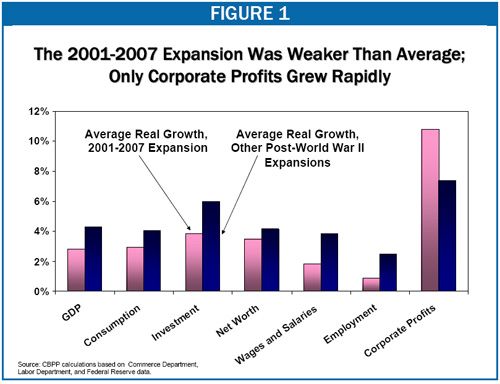
Fox News Inflates Impact Of Bush Tax Cuts. This story is related to the charts above. If tax cuts created jobs we should have more job opening than there are unemployed, but we do not. Tax cuts just put more money in the pockets of the wealthy. How many $75,000 cars do these wealthy slackers need? Not enough to keep the economy going for the middle-class.

Monday, July 2, 2012

Romney Caught in Two More Lies - When He Left Bain and His Ownership of Medical Waste Company


Romney Caught in Two More Lies - When He Left Bain and His Ownership of Medical Waste Company

Earlier this year, Mitt Romney nearly landed in a politically perilous controversy when the Huffington Post reported that in 1999 the GOP presidential candidate had been part of an investment group that invested $75 million in Stericycle, a medical-waste disposal firm that has been attacked by anti-abortion groups for disposing aborted fetuses collected from family planning clinics. Coming during the heat of the GOP primaries, as Romney tried to sell South Carolina Republicans on his pro-life bona fides, the revelation had the potential to damage the candidate's reputation among values voters already suspicious of his shifting position on abortion.

But Bain Capital, the private equity firm Romney founded, tamped down the controversy. The company said Romney left the firm in February 1999 to run the troubled 2002 Winter Olympics in Salt Lake City and likely had nothing to with the deal. The matter never became a campaign issue. But documents filed by Bain and Stericycle with the Securities and Exchange Commission—and obtained by Mother Jones—list Romney as an active participant in the investment. And this deal helped Stericycle, a company with a poor safety record, grow, while yielding tens of millions of dollars in profits for Romney and his partners. The documents—one of which was signed by Romney—also contradict the official account of Romney's exit from Bain.

The Stericycle deal—the abortion connection aside—is relevant because of questions regarding the timing of Romney's departure from the private equity firm he founded. Responding to a recent Washington Post story reporting that Bain-acquired companies outsourced jobs, the Romney campaign insisted that Romney exited Bain in February 1999, a month or more before Bain took over two of the companies named in the Post's article. The SEC documents undercut that defense, indicating that Romney still played a role in Bain investments until at least the end of 1999.

All politicians hedge on the truth a bit. We all expect that. Mitt Romney - Mr Values Mr. Stand-up Guy - Mr Morals seems to think this election cycle is a contest to see how many and often he can tell big lies. If Romney is the moral standard of Republican conservatism that say a lot about how far down in the stinking gutter conservatism has sunk. Many American seem to have learned nothing from the Bush-Cheney years - that when conservatives say they stand for values - they mean deeply repugnant values.

Crazy Conservative Carly Fiorina — a Mitt Romney surrogate Falsely Claims That Obamacare Would Harm Breast Cancer Patients. Carly studied truth telling at the Soviet Politburo when she was growing up.


Is there some wealth redistribution going on in the USA. Yes there is. Corporate America is taking all the profits from worker productivity. Can we call it class war yet? Corporate profits are at an all time high; wages are at an all time low

Tuesday, May 29, 2012

Mitt Romney is an Anti-American Vulture, Not a Capitalist


Romney is an Anti-American Vulture, Not a Capitalist, Why Mitt Romney’s Time At Bain Capital Matters

As we discussed yesterday, Mitt Romney’s tenure at Bain Capital is once again back in the news — big time. As President Obama said, this is not a distraction, it’s central to the main question of this campaign: do we create an economy that works for everyone, not just the wealthy few, or, do we double down on an economy where the game is rigged for the rich at the expense of the middle class?

It’s also not a distraction because Mitt Romney himself has made his business experience the centerpiece of his campaign, saying just today that “of course” he welcomes a discussion of his record at Bain Capital.

Here’s the rundown on Mitt Romney’s time at Bain Capital — and why it still matters today.

Jobs

While running Bain Capital, whose investments he still profits from to this day, Mitt Romney amassed a quarter-billion dollar fortune by bankrupting companies, laying off thousands of American workers, closing factories and sending jobs overseas.  As experts on the private equity industry and even his own former Bain colleagues openly admit, Romney’s job was not to create jobs, it was to create wealth for himself and other investors.

Romney and his campaign have made a wide variety of claims regarding how many jobs he created while at Bain: thousands, tens of thousands, 100,000, and even “well in excess of 100,000.” Neither Romney nor Bain has offered any proof to substantiate any of these claims and multiple independent fact checkers have concluded that Romney’s claims on job creation at Bain are simply false.

The most important job for our next president is to create jobs and get the economy moving faster. When asked today to predict the unemployment rate under a Romney presidency, he predicted that it would be 6 percent at the end of his first term in 2016 — which is exactly where economists predict it will be anyway.

A Rigged Game

One of the reasons Romney has been able to amass such an immense fortune is because he’s been able to take advantage of a tax code that is rigged to favor the wealthy few. He pays a lower tax rate than millions of middle class workers because of a variety of loopholes and giveaways, including one major loophole available only to private equity and hedge fund managers like himself and his partners at Bain Capital.

The Safety Net

While at Bain Capital, Romney left thousands of workers without  jobs, health insurance, or the pensions they’d been promised.

In order to partially offset the cost of his giveaways to the very wealthy, Romney slashes Social Security, Medicare, Medicaid, and vital programs that benefit the middle class every day and are the key to economic growth.  Earlier this year, Romney famously said that he’s “not concerned about the very poor,” which is reflected in his support for a budget that would throw 13 million people off food stamps and 1 million off Pell grants.

Jobs Here or Jobs Overseas?

Under Romney’s leadership, both Bain Capital and his administration in Massachusetts sent jobs overseas.  Now, Romney has signed a pledge to protect all tax giveaways, including those that reward companies who ship jobs overseas.

President Obama, by contrast, has put ending those tax giveaways in order to pay for rewarding companies who bring jobs back to the U.S. on the to-do list he recently submitted to Congress.

IN ONE SENTENCE: Mitt Romney’s past at Bain Capital was the prologue to a presidential campaign based on policies that will benefit the very wealthiest Americans at the expense of the middle class.

Do you believe in fairness? Do you believe that people should do work to earn their money? Do you believe that having great ideas like a cure for heart disease or a new energy saving refrigerator should be rewarded? Do you believe that is how capitalism should work. Then you cannot support Mitt Romney or the kind of back door crony vulture capitalism that Romney represents.Romney and like minded conservatives swoop down on the capital created by the work of others and exploits that for profit. For a short film on how the crony corrupt capitalism of Mitt Romney works see here -  How Did Mitt Romney Get So Obscenely Rich?

Thursday, April 19, 2012

Conservative Republican John Raese Cannot Tell The Difference Between Regulated Smoking Areas and The Holocaust


 John Raese, a very wealthy Republican who may or may not live in West Virginia, was one of the most colorful Senate candidates of 2010 when he ran against now-Sen. Joe Manchin (D-WV). This year, he wants a rematch against Manchin (Raese has already lost three Senate races and one for governor), and Raese appears to have lost none of the qualities that led the Manchin campaign to call him “crazy” two years ago.

Speaking at the Putnam County Lincoln Day dinner recently, Raese compared his county’s smoking regulations to when “Hitler used to put [a] Star of David” on Jews:

    RAESE: I don’t want government telling me what I can do and what I can’t do because I’m an American. But in Monongalia County you can’t smoke a cigarette, you can’t smoke a cigar, you can’t do anything. And I oppose that. … I have to put a huge sticker on my buildings to say this is a smoke free environment. This is brought to you by the government of Monongalia County. OK?

    Remember Hitler used to put Star of David on everybody’s lapel, remember that? Same thing.


In his last bid, Raese said the minimum wage was unconstitutional, said he wanted to take capitalism back to the days before child labor laws, blamed volcanoes for global warming, made fun of Chinese last names, and proudly proclaimed, “I made my money the old-fashioned way — I inherited it.” Perhaps most famously, one of Raese’s biggest ideas from 2010 was demanding “1,000 laser systems put in the sky” for missile defense. “And need it right now,” he added to demonstrate his seriousness. 
Pictured are USA hating Conservatives Raese, Palin, Nugent

Actually the laws in Putnam are like they are in most places. You cannot smoke in public buildings like schools and courthouses because of the second hand smoke.


Mitt Romney's Bain Represents Crony Capitalism's Worst. Conservatives caused the recession of the 1980s. They caused the recession of 2008. But hey forget all that and vote for them in 2012. Maybe they'll get it right this time.