Showing posts with label welfare for the wealthy. Show all posts

Friday, February 1, 2013

If We Cut Corporate Taxes Does Is That Good For the State and Jobs? NO! How States Lose $600 Million On A Worthless Corporate Tax Break


If We Cut Corporate Taxes Does Is That Good For the State and Jobs? NO! How States Lose $600 Million On A Worthless Corporate Tax Break

There’s no shortage of corporate tax giveaways at both the federal and state levels. Lawmakers of all stripes love to use the tax code to subsidize companies, either directly or indirectly.

But in some instances, federal tax breaks for corporations undermine state budgets. As the Center for Budget and Policy Priorities detailed today, one particular tax break will cost states $600 million next year:

    The federal government created this tax break, known as the “domestic production deduction,” in 2004. Since most states base their own tax codes on the federal tax code, the tax break was carried over into many states without specific legislative scrutiny or a vote. Now it is costing not only the federal government but also 25 states a large amount of money. By 2014, it will cost these states over $600 million per year.

    The deduction — enacted as Section 199 of the federal Internal Revenue Code — allows companies to claim a tax deduction based on profits from “qualified production activities,” a sweeping category that goes well beyond manufacturing to include such diverse activities as food production, filmmaking, and utilities — a substantial share of states’ corporate income tax base.

These deductions are largely worthless, and many states have tossed them overboard. But 25 states still leave it intact:

As CBPP noted, “Firms can claim the domestic production deduction for profits from all qualifying domestic activities — meaning activities that occur anywhere within the United States. As a result, a multi-state firm can claim the deduction in a conforming state for production activities in any state, not just the state where the firm is filing.” They also benefit large firms at the expense of small.

State efforts to encourage corporate growth and job creation through the tax code usually encourage a race to the bottom, as corporations play states off each other in order to secure the most preferential treatment, and then feel no hesitation about up and leaving later. Of course, paying corporations to create jobs is only one of the bone-headed ways states try to generate economic activity.

Another conservative myth bites the dust, again. 

Monday, September 24, 2012

Mitt Romney Thinks It Is Fair That He Does Not Work For His Income and Pays Lower Taxes Than The Average Working Class American


Mitt Romney Thinks It Is Fair That He Does Not Work For His Income and Pays Lower Taxes Than The Average Working Class American

Mitt Romney told CBS’s 60 Minutes that it’s “fair” for him to pay a tax rate of just 14.1 percent on his investment income of $20 million, a lower rate than someone earning $50,000 a year in wage income:

    SCOTT PELLEY (HOST): Now, you made on your investments, personally, about $20 million last year. And you paid 14 percent in federal taxes. That’s the capital gains rate. Is that fair to the guy who makes $50,000 and paid a higher rate than you did?

    ROMNEY: It is a low rate. And one of the reasons why the capital gains tax rate is lower is because capital has already been taxed once at the corporate level, as high as 35 percent.

    PELLEY: So you think it is fair?

    ROMNEY: Yeah, I think it’s the right way to encourage economic growth, to get people to invest, to start businesses, to put people to work.

There is little economic evidence to support Romney’s argument that higher capital gains and dividend rates will discourage investment. As Paul Krugman has pointed out, the current very low rate of 15 percent, wasn’t enacted until 2003. Between 1986 and 1997 “long-term capital gains were taxed at close to 30 percent” and under President Clinton, the rate sat at 20 percent, while dividends were treated as regular income. “I have worked with investors for 60 years and I have yet to see anyone — not even when capital gains rates were 39.9 percent in 1976-77 — shy away from a sensible investment because of the tax rate on the potential gain,” Warren Buffet explains.

Indeed, investors continued to invest, despite the higher rates, and throughout the Clinton period, the nation actually saw stronger investment. So it’s difficult to take Romney’s argument seriously — both because history shows that the wealthy don’t need a capital gains rate 20 points below the top marginal income tax rate (currently 35 percent) in order to invest their money and because Romney himself believes he paid too little in investment taxes, choosing to forfeit $1.8 million in charitable deductions.

Romney's contribution to charity are also kind of a inside joke. Most of it goes to the Mormon Church, which operates more like a corporation than a charity.

Hey Romney & Ryan: This is what you get when you threaten Seniors Medicare, Social Security

Why Are Anti-American Conservative Bloggers Obsessed With Julia


Monday, July 16, 2012

Myth Busters: The Super Wealthy and Big Business Are America's Biggest Welfare Queens


Myth Busters: The Super Wealthy and Big Business Are America's Biggest Welfare Queens

Wealthy individuals and corporations want us to believe they've made it on their own, without the help of government or the American people. Billionaire financier Sanford Weill blustered, "We didn't rely on somebody else to build what we built." He was echoing the words of his famous predecessor, the formidable financier J. P. Morgan, who spouted, "I owe the public nothing."

That's the bull of Wall Street. There are at least five good reasons why the wealthiest Americans need government as much as the rest of us, and probably more.

1. Security

In his "People's History," Howard Zinn described colonial opposition to inequality in 1765: "A shoemaker named Ebenezer Macintosh led a mob in destroying the house of a rich Boston merchant named Andrew Oliver. Two weeks later, the crowd turned to the home of Thomas Hutchinson, symbol of the rich elite who ruled the colonies in the name of England. They smashed up his house with axes, drank the wine in his wine cellar, and looted the house of its furniture and other objects. A report by colony officials to England said that this was part of a larger scheme in which the houses of fifteen rich people were to be destroyed, as part of 'a war of plunder, of general levelling and taking away the distinction of rich and poor.'"

That doesn't happen much anymore. Of course, the super-rich aren't taking any chances, with panic shelters and James Bond cars and personal surveillance drones. But the U.S. government will be helping them by spending $55 billion on Homeland Security next year, in addition to $673 billion for the military. The police, emergency services, and National Guard are trained to focus on crimes against wealth.

In the cities, business interests keep the police focused on the homeless and unemployed. And on drug users. A "Broken Windows" mentality, which promotes quick fixes of minor damage to discourage large-scale destruction, is being applied to human beings. Wealthy Americans can rest better at night knowing that the police are "stopping and frisking" in the streets of the poor neighborhoods.

2. Laws and Deregulations

The wealthiest Americans are the main beneficiaries of tax laws, property rights, zoning rules, patent and copyright provisions, trade pacts, antitrust legislation, and contract regulations. Tax loopholes allow them to store over $1 trillion in assets overseas.

Their companies benefit, despite any publicly voiced objections to regulatory agencies, from SBA and SEC guidelines that generally favor business, and from FDA and USDA quality control measures that minimize consumer complaints and product recalls.

The growing numbers of financial industry executives have profited from 30 years of deregulation, most notably the repeal of the Glass-Steagall Act. Lobbying by the financial industry has prolonged the absurdity of a zero sales tax on financial transactions.

Big advantages accrue for multinational corporations from trade agreements like NAFTA, with international disputes resolved by the business-friendly World Bank, International Monetary Fund, and World Trade Organization. Federal judicial law protects our biggest companies from foreign infringement. The proposed Trans-Pacific Partnership would put governments around the world at the mercy of corporate decision-makers.

The euphemistically named JOBS Act further empowers business, exempting startups from regulatory accounting requirements.

There are even anti-antitrust measures, such as the licensing rules that allow the American Medical Association to restrict the number of doctors in the U.S., thereby keeping doctor salaries artificially high. Can't have a free market if it hurts business.

3. Research and Infrastructure

A publicly supported communications infrastructure allows the richest 10% of Americans to manipulate their 80% share of the stock market. CEOs rely on roads and seaports and airports to ship their products, the FAA and TSA and Coast Guard and Department of Transportation to safeguard them, a nationwide energy grid to power their factories, and communications towers and satellites to conduct online business. Private jets use 16 percent of air traffic control resources while paying only 3% of the bill.

Perhaps most important to business, even as it focuses on short-term profits, is the long-term basic research that is largely conducted with government money. Especially for the tech industry. Taxpayer-funded research at the Defense Advanced Research Projects Agency (the Internet) and the National Science Foundation (the Digital Library Initiative) has laid a half-century foundation for technological product development. Well into the 1980s, as companies like Apple and Google and Microsoft and Oracle and Cisco profited from the fastest-growing product revolution in American history, the U.S. Government was still providing half the research funds. Even today 60% of university research is government-supported.

Public schools have helped to train the chemists, physicists, chip designers, programmers, engineers, production line workers, market analysts, and testers who create modern technological devices. They, in turn, can't succeed without public layers of medical support and security. All of them contribute to the final product.

As the super-rich ride in their military-designed armored cars to a financial center globally connected by public fiber optics networks to make a trade guided by publicly funded data mining and artificial intelligence software, they might stop and re-think the old Horatio Alger myth.

4. Subsidies

The traditional image of 'welfare' pales in comparison to corporate welfare and millionaire welfare. Whereas over 90% of Temporary Assistance for Needy Families goes to the elderly, the disabled, or working households, most of the annual $1.3 trillion in "tax expenditures" (tax subsidies from special deductions, exemptions, exclusions, credits, and loopholes) goes to the top quintile of taxpayers. One estimate is $250 billion a year just to the richest 1%.

Senator Tom Coburn's website reports that mortgage interest and rental expense deductions alone return almost $100 billion a year to millionaires.

The most profitable corporations get the biggest subsidies. The Federal Reserve provided more than $16 trillion in financial assistance to financial institutions and corporations. According to Citizens for Tax Justice, 280 profitable Fortune 500 companies, which together paid only half of the maximum 35 percent corporate tax rate, received $223 billion in tax subsidies.

Even the conservative Cato Institute admitted that the U.S. federal government spent $92 billion on corporate welfare during fiscal year 2006. Recipients included Boeing, Xerox, IBM, Motorola, Dow Chemical, and General Electric.

In agriculture, most of the funding for commodity programs goes to large agribusiness corporations such as Archer Daniels Midland. For the oil industry, estimates of subsidy payments range from $10 to $50 billion per year.

5. Disaster Costs

Exxon spokesperson Ken Cohen once said: "Any claim we don't pay taxes is absurd...ExxonMobil is a leading U.S. taxpayer." Added Chevron CEO John Watson: "The oil and gas industry pays its fair share in taxes" But SEC documents show that Exxon paid 2% in U.S. federal taxes from 2008 to 2010, Chevron 4.8%.

As if to double up on the insult, the petroleum industry readily takes public money for oil spills. Cleanups cost much more than the fines imposed on the companies. Government costs can run into the billions, or even tens of billions, of dollars.

Another disaster-prone industry is finance, from which came the encouraging words of Goldman Sachs chairman Lloyd Blankfein: "Everybody should be, frankly, happy...the financial system led us into the crisis and it will lead us out."

Estimates for bailout funds from the Treasury and the Federal Reserve range between $3 trillion and $5 trillion. That's enough to pay off both the deficit and next year's entitlement costs. All because of the irresponsibility of the super-salaried CEOs of our most profitable corporations.

Common Sense

Patriotic Millionaires recently addressed the President and Congress: "Given the dire state of our economy, it is absurd that one-quarter of all millionaires pay a lower tax rate than millions of working, middle-class American families...Please do the right thing for our country. Raise our taxes."

It's good to know somebody gets it right. Taxes, for the most part, are not unfair. They represent payment for society's many benefits, which get bigger and better as people get richer.

Paul Buchheit is a college teacher, an active member of US Uncut Chicago, founder and developer of social justice and educational websites (UsAgainstGreed.org, PayUpNow.org, RappingHistory.org),


Conservatives are in perpetual paranoia mode about someone getting a few dollars for food - that conservatives with supernatural extrasensory perception are sure they do not deserve. Yet billions, even trillions of unearned income go into the pockets of the elite. Conservatives and the elite ( not all wealthy people are elites to be fair) feel that we should all be down on our knees praising these thieves.

Mitt Romney plans on resurrecting the worse policies of the Bush administration. For those with a short memory, Bush was our first MBA (Masters of Business Administration) president - Whorehouse Morals and Business Ethics

Economists: Romney’s Plan Would Spark a New Recession


Saturday, July 14, 2012

Mitt Romney Cannot See Past His Supreme Arrogance To Apologize To President Obama and The American People


Mitt Romney Cannot See Past His Supreme Arrogance To Apologize To President Obama and The American People

It was hidden in plain sight as a Bain press release in July 1999. Here's how it described Romney's position at Bain when he says he had no responsibility whatever, despite remaining CEO, Chairman and Sole Owner as far as forms filed with SEC testify:

    Bain Capital CEO W. Mitt Romney, currently on a part-time leave of absence to head the Salt Lake City Olympic Committee for the 2002 Games said ...

So Bain now contradicts Romney. And one of the men mentioned in the press release, Marc Wolpow, described his relationship with Romney when Romney was on a previous part time leave in 1994 when running for Senate (while remaining CEO of Bain):

    “I reported directly to Mitt Romney . . . You can’t be CEO of Bain Capital and say, `I really don’t know what my guys were doing,’” Mr. Wolpow said of Mr. Romney role at the company during his leave.

So this much is now obvious.

1. Romney didn't quit Bain in 1999 for good, as he claims. He remained the CEO throughout, as SEC files show, and as the Boston Globe reported back in 2002.

2. He stayed active in Bain, but at a much reduced level, the entire time.

3. In any case, everything that occurred at Bain up to 2002 is completely fair game for criticism, since he was the formal CEO at the time and therefore responsible for the whole company. The SEC filings are dispositive. He has been lying about this in order to deflect some very dangerous stories about Bain in that period which shows it is knee deep in outsourcing and off-shoring, and because his signature is on a filing with respect to a company that Bain owned that disposed of aborted babies.

Romney basically said what was the most convenient for his self-interest at every juncture - and finally all the contradictions and changing stories caught up with him.

This SEC filing list Romney as "As member of the Management Committee of each of BCIP and BCIP Trust". How does one get to be on a management committee and have absolutely no knowledge of what is going in in a company in which Romney is the sole owner. Now we have Romney playing liar's bluff - calling out President Obama for an apology. Romney owes Obama and the America people for dumping a truckload of deeply deceptive and immoral lies. Exactly who or what country is Romney loyal to - Unanswered questions about Romney’s UnAmerican offshore finances - he seems have set himself up to avoid paying his fair share of America's infrastructure ( multimillionaire conservatives always think they're too good to pay their way. They're VIPs and should get everything for free). Mitt might have a good excuse - he has the mental temperament of a bratty 8 year old - Romney’s Top Six ‘I Know I Am But So Are You’ Moments. Romney clearly does not have the moral backbone or maturity to be president.

How A Radical Conservative Republican Group Is Infiltrating State News Coverage


Thursday, July 12, 2012

Washington Post reporter Glenn Kessler and factcheck.org Are Wrong. Romney Lied About His Tenure at Bain


Portrait of evil - Florida Criminal Gov Rick Scott


Washington Post reporter Glenn Kessler and factcheck.org Are Wrong. Romney Lied About His Tenure at Bain

After weeks and weeks of being pummeled by the Obama campaign for his business record, Mitt Romney is finally releasing response ads today. The response is that Obama is lying. ("How can we trust him to lead?" etc.) The ad cites articles by media “fact-checkers”: Washington Post reporter Glenn Kessler and factcheck.org.

In an incredibly inconvenient piece of timing, the Boston Globe today also reports that Romney has been lying about when he left Bain Capital. This is utterly crucial. Both the fact-checking columns base their conclusions on Romney’s claim that he left Bain in 1999. Obama’s ads are misleading, both say, because they hold Romney accountable for things Bain did after 1999. The revelation that Romney was actively managing Bain renders both those judgments moot.

Here is the core of the Globe’s finding:

    Romney has said he left Bain in 1999 to lead the winter Olympics in Salt Lake City, ending his role in the company. But public Securities and Exchange Commission documents filed later by Bain Capital state he remained the firm’s “sole stockholder, chairman of the board, chief executive officer, and president.”

    Also, a Massachusetts financial disclosure form Romney filed in 2003 states that he still owned 100 percent of Bain Capital in 2002. And Romney’s state financial disclosure forms indicate he earned at least $100,000 as a Bain “executive” in 2001 and 2002, separate from investment earnings.
Romney has sworn he is telling the truth. Documents that he filed and signed prove he is lying. The issue now moves forward as something symptomatic of Romney's mental state and/or his moral sensibilities. Even without these revelations Romney has no real qualifications to be president. Now it seems that he lacks the moral integrity that was supposed to be one of his great character traits.

Proof that the Right is FREAKING OUT over "Swiss Bank Account" attacks [UPDATED]. When Mitt Romney is not telling insulting lies to the American public, he has plenty of mindless fake patriots do it for him.

The American Jobs Act and Who is Working to Sabotage The Recovery

The Tea Party Caucus waged an all-out propaganda campaign against the AJA, decrying it as more stimulus and an example of big government. House Republicans obstructed the Jobs Act, refusing to allow it even to come to a vote. Senate Republicans used the much-abused filibuster to defeat it. But polls continued to favor the president, and as a result, Obama was able to force Boehner & Co. to pass a one-third cut in employees' payroll taxes and an extension of unemployment benefits.

And herein lies the rub: The GOP is touting a flailing economy, saying that Obama's policies are the cause of the malaise -- but it is Republicans who have deliberately orchestrated these outcomes by refusing to pass a signature, jobs-focused piece of legislation.

What is worse is that their destructive tactics disproportionately fall on the backs of African Americans, Hispanics, low-income earners and the poor. The GOP does not care -- since it calculates that disheartened citizens will be less motivated to go to the polls come November. And with new voter-id laws in place, the black and brown vote will be subject to a perfect storm of suppression that spells a win for Romney.

Republicans are betting on a premise that white working-class voters will become so frustrated with the economic slowdown that they will vote against the first African-American president and instead elect a rich white guy and private-equity magnate -- who notoriously destroyed companies while profiting enormously.

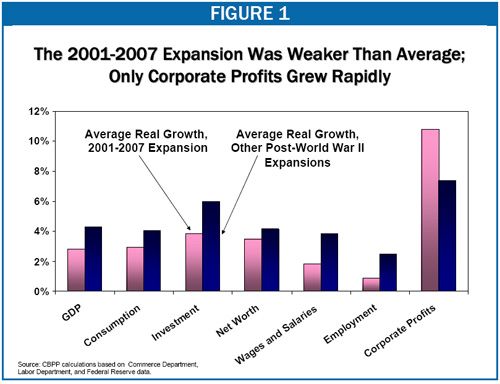
Fox News Inflates Impact Of Bush Tax Cuts. This story is related to the charts above. If tax cuts created jobs we should have more job opening than there are unemployed, but we do not. Tax cuts just put more money in the pockets of the wealthy. How many $75,000 cars do these wealthy slackers need? Not enough to keep the economy going for the middle-class.

Tuesday, June 26, 2012

Based on The Number of Shameless Lies, Mitt Romney May Be The Most Immoral Presidential Candidate In Modern History


Based on The Number of Shameless Lies, Mitt Romney May Be The Most Immoral Presidential Candidate In Modern History

Not everything Mitt Romney says is on the level.

For those who are watching the 2012 presidential race closely, Mitt Romney's penchant for falsehoods is hard to miss. Michael Cohen summarized the issue nicely this week in a piece for The Guardian:

    Granted, presidential candidates are no strangers to disingenuous or overstated claims; it's pretty much endemic to the business. But Romney is doing something very different and far more pernicious. Quite simply, the United States has never been witness to a presidential candidate, in modern American history, who lies as frequently, as flagrantly and as brazenly as Mitt Romney.

    Now, in general, those of us in the pundit class are really not supposed to accuse politicians of lying -- they mislead, they embellish, they mischaracterize, etc. Indeed, there is natural tendency for nominally objective reporters, in particular, to stay away from loaded terms such as lying. Which is precisely why Romney's repeated lies are so effective. In fact, lying is really the only appropriate word to use here, because, well, Romney lies a lot.

If there are any lingering doubts about the accuracy of this observation, consider the 23rd installment of my weekly series, chronicling Mitt's mendacity. (I've been at this for several months now, and this week's list is the longest to date.)

1. In an interview with Fox News' Sean Hannity, Romney claimed it's fiscally responsible to eliminate the entirety of the Affordable Care Act: "It saves $100 billion a year to get rid of it."

That's the opposite of the truth. According to the CBO and other nonpartisan budget estimates, killing the law would make the deficit go up, not down, and would cost, not save, the country hundreds of billions of dollars in the coming years.

2. In the same interview, Romney said, "I think a lot of people forgetting is there is only one president in history that's cut Medicare by $500 billion and that is President Obama."

Romney says this a lot. He's not telling the truth.

3. Romney also said, "I see people holding up signs, 'Don't touch my Medicare.' It's like, hey, I'm not touching your Medicare."

Romney endorsed Paul Ryan's House Republican Budget plan, which ends the Medicare program and replaces it with a private voucher scheme.

4. In the same interview, Romney said President Obama has "never had the experience of working in the private sector."

Actually, that's not true. Obama worked at a private-sector law firm before entering public service.

5. Romney also told Hannity Obama went on "an apology tour" in his first year.

As Romney surely knows by now, he's lying.

6. Romney, trying to talk about foreign policy, said Syria is Iran's "route to the sea."

Iran doesn't share a border with Syria, and Iran already borders two bodies of water.

7. At a campaign event in Stratham, New Hampshire, Romney claimed, "Bill Clinton and so many other mainstream Democrats are revolting against the backward direction President Obama is taking his party and our country."

In reality, Bill Clinton supports the president's re-election and recently said a Romney presidency would be "calamitous for our country and the world."

8. At an event in Cornwall, Pennsylvania, shared an anecdote about a local optometrist who was forced to fill out a "33-page" change-of-address form -- several times -- at the post office.

There is no such change-of-address form.

9. At the same event, Romney said Obama is "taking away" scholarships and charter schools for "kids in Washington, D.C."

This has become a line in Romney's stump speech, but it isn't in any way true.

10. Romney also claimed, "This president has put together almost as much public debt as all the prior presidents combined."

That's a lie.

11. Romney went on to say, "It's immoral in my view for my generation to pass on to these kids the burden of our generation. I think it's wrong. It's got to stop. And if I'm president of the United States I will get us on track to have a balanced budget."

That's plainly false. Romney says his plan "can't be scored," but independent budget analysts have found his agenda would make the deficit bigger, not smaller, and add trillions to the national debt.

12. At a campaign stop in Weatherly, Pennsylvania, Romney said the president's "trillion- dollar stimulus" failed to "create jobs."

That's the opposite of the truth.

13. At the same event, Romney said about Obama, "He was told that one small business was having a hard time dealing with Obamacare. He said he hadn't heard that."

That's not what happened. In fact, the small business wasn't having a hard time dealing with Obamacare, and was hurt by policies Romney wants to pursue.

14. Romney went on say, "I was in Las Vegas and met a woman who was worried. She has a business renting furniture to casinos and to conventioners that come to Las Vegas. And when the president said, don't bother coming to Las Vegas for your company meetings a few years ago, her business dove."

Obama actually said, in reference to Wall Street recklessness, "You are not going to be able to give out these big bonuses until you pay taxpayers back. You can't get corporate jets. You can't go take a trip to Las Vegas or go down to the Super Bowl on the taxpayers' dime. There's got to be some accountability and some responsibility." To blame the failure of some random business in Nevada on this is ridiculous.

15. Romney added, "If we stay on the road we're on, we're going to become like Europe.... I don't believe Europe works in Europe. I don't want it here."

The irony is, Europe is trying to grow through austerity, just as Romney intends to do here. He's lying in a self-refuting sort of way.

16. In his "Face the Nation" interview, Romney said of Obama's new immigration policy, "If he really wanted to make a solution that dealt with these kids or with the illegal immigration in America, then this is something he would have taken up in his first three and a half years, not in his last few months."

That's remarkably misleading. Obama has pushed for the DREAM Act for years, and would have signed it into law in 2010 had it not been blocked by a Republican filibuster.

17. In the same interview, Romney said about health care, "I will continue to describe the plan that I would provide, which is, number one, to make sure that people don't have to worry about losing their insurance if they have a preexisting condition, and change jobs."

This is the kind of answer that's clearly intended to deceive. Under Romney's approach, millions of people with pre-existing conditions would be denied coverage -- and occasionally his campaign even admits it.

18. Also on health care, Romney said the president "jammed through a bill" and "didn't really try and work for a Republican vote."

This is laughably untrue. Obama worked for months to find someone -- anyone -- in the Republican Party who would work with him in good faith, including delaying progress while the "Gang of Six" engaged in pointless talks.

19. Romney also said, "I'm not looking for a tax cut for the very wealthiest."

Either Romney hasn't read his own tax plan, or he's lying.

20. Appearing via video at the "Faith and Freedom Coalition" annual event, Romney applauded the far-right group's leader: "Ralph Reed has been a real champion in fighting for the fundamental values that have made America the nation that it is."

You've got to be kidding me.

21. In the same speech, Romney said, "When you put in place a bill like Obamacare, you attack the freedom of people to make a choice about their own insurance and what kind of coverage they want to have."

That's not true. Under the Affordable Care Act, consumers would choose from competing plans as part of a health care exchange. Romney knows this -- it was part of his own plan.

22. Romney went on to say, "[M]edian income in this nation has dropped by 10 percent over the last four years."

That only makes sense if we count Obama's first year in office, which relies on a standard Romney believes is fundamentally unfair.

23. He also argued, "Government at all levels is about 37 percent of the economy today -- 37 percent. And if Obamacare were allowed to stand, government would control about half of the economy of America."

That's demonstrably ridiculous.

24. At the same event, Romney said that Obama "insists" that "Israel return to the '67 borders -- indefensible borders."

He's lying.

25. At a campaign event in Brunswick, Ohio, Romney claimed that Obama said "if you let him borrow all that money, he'd keep unemployment below 8 percent."

As Romney surely knows by now, that's simply not true.

26. At the same event, Romney said under Obamacare, we'll get "a healthcare system run by the government."

There is no universe in which this is true.

27. At a campaign event in Janesville, Wisconsin, Romney argued, "[T]he path we're on, spending $1 trillion more every year than we take in, is leading us to Greece."

That's painfully untrue.

28. At a campaign event in Holland, Michigan, Romney claimed that, as a result of the Dodd-Frank reforms, "small banks and community banks are finding it harder and harder to make loans to small businesses."

According to community banks, this is false. These banks have actually gotten stronger after Dodd-Frank, and the president of Independent Community Bankers Of America recently said, "I am sick of Wall Street using community banks as their shills to scare community bankers into stampeding Congress into undoing provisions of law that finally attempt to deal with too big to fail and Wall Street overreach."

29. In a speech to the National Association of Latino Elected and Appointed Officials yesterday, Romney argued that President Obama "has not completed a single new trade agreement with Latin America."

Romney does realize that Panama is part of Latin America, right?

30. Romney went on to argue, "Unfortunately, despite his promises, President Obama has failed to address immigration reform."

Actually, Obama has addressed it quite a bit, taking executive action where the law allows, and pushing Congress to pursue comprehensive reform based on a bipartisan plan he presented last year.

Mitt Romney should not be allowed near the White House, he should be in a psychiatric hospital under medication and having regular therapy sessions. The other possibility is that Romney is as venal and malicious as a person can be. And because he is so wealthy he can get away with being radical, anti-middle-class, anti-American worker agenda; he is a crony capitalist who believes in government by and for the elite.


Tuesday, June 12, 2012

Mitt Romney Beleives in Voodoo. In Other Words He'll Be Bush 3.0


It was a Bush and Conservative Republican fairy tale that tax cuts would pay for themselves and create jobs. That while trickle down supply-side economics did not work under Reagan and has never worked any where for long, this time, with a little magic and wishful thinking voodoo economic would work. Mitt is not one to give up on the belief in voodoo economic magic. Many Americans Will Buy Romney's Economic Fairy Tales Just Like They Bought Bush's

Mitt Romney delivered a speech today about the budget deficit. It’s hard to wrap your arms around Romney’s argument, because it’s an amalgamation of free-floating conservative rage and anxiety, completely untethered to any facts, as agreed upon by the relevant experts.

In the real world, the following things are true: The budget deficit was projected to top $1 trillion even before President Obama took office, and that was when forecasters were still radically underestimating the depth of the 2008 crash. Obama did propose temporary deficit-increasing measures, an economic approach endorsed in its general contours, if not its particulars, by Romney’s economists. These measures contributed a relatively small proportion to the deficit, and their effect is short-lived. Obama instead focused on longer-term measures to reduce the deficit, including comprehensive health-care reform projected to reduce deficits by a trillion dollars in its second decade. Obama put forward a budget plan that would stabilize the debt as a percentage of the economy. Obama has hoped to achieve deeper long-term deficit reduction by striking bipartisan deals with Congress, and he has tried to achieve this goal by openly endorsing a bipartisan deficit plan in the Senate and privately agreeing to a more conservative plan with John Boehner, both of which were killed by Republican opposition to any higher revenue.

The story told by Romney is one in which all of these things are either untrue or could not possibly be true.

Romney elides some inconvenient facts — for instance, by asserting “Then there was Obamacare. Even now nobody knows what it will actually cost,” which is literally true in the sense that precise cost estimates are always impossible, but sounds to his audience like a claim that the program will swell the deficit in vast, unknowable ways. But most of Romney’s speech doesn't even refer to the facts stated above. It's simply orthogonal to facts. It’s a story, one in which Obama increased the deficit because he loves big government and Europe and hates the private sector.

Not only does Romney elide vast swaths of established facts about the deficit, it’s fairly clear that he does not operate within the mainstream understanding of the term “deficit” at all. As Jonathan Bernstein has repeatedly explained, modern Republican behavior and even language in relation to the deficit is completely nonsensical if you understand “the deficit” to mean the gap between revenue and outlays. Republican use of the term only makes sense if you define “the deficit” to mean “spending Republicans don’t like.” That’s why Republicans consider it impossible to believe that one could simultaneously extend health insurance to the uninsured while reducing the deficit.

Look at Romney’s terms to describe deficits, and it’s pretty clear he has adapted himself to his party’s conceptualization of it. His speech includes the following phrases:

    a financial crisis of debt and spending

    Washington has been spending too much money

    out-of-control spending sprees, or to piling up massive amounts of debt

    This is why I do not, for one moment, share my opponent’s belief that our spending problems can be solved with more taxes.

In Romney’s telling, the terms debt and spending are essentially interchangeable. When presented with Obama’s position — that the solution to the debt ought to include both higher taxes and lower spending — he rejects it out of hand. Naturally, Romney has admitted before that his budget plan “can’t be scored.” It’s an expression of conservative moral beliefs about the role of government. While loosely couched in budgetary terms, Romney is expressing an analysis that resides outside of, and completely at odds with, mainstream macroeconomic forecasting and scoring assumptions.

Cannot be "scored" means that no unbiased expert will say that his plan will reduce the deficit. No unbiased expert will say that the Romney plan will not gut Medicare. Tax cuts did not create jobs from 2001 to 2008 - employment remained flat. Extending tax cuts did not create jobs from 2008 until today ( the stimulus created jobs). never mind the facts, Romney will have more tax cuts for millionaires because conservatives believe the elite should not pay their fair share for the cost of America's infrastructure. America's wealthiest citizens and corporations are the biggest group of welfare recipients. They are supported by a middle-class that is shrinking every year.

Mitt Romney has a long history of attacking firefighters and their unions, going back to his days in Massachusetts

President Obama was right, Wages haven’t kept pace with recovery, study finds.
The stock market is improving. Corporate profits are up dramatically. But workers’ wages don’t seem to be rising, a study finds.