Showing posts with label greed. Show all posts

Tuesday, October 1, 2013

Watch Out Patriots, The Conservative Wall Street Plutocrats Are Coming After Your Pension


Watch Out Patriots, The Conservative Wall Street Plutocrats Are Coming After Your Pension
Lips are smacking on Wall Street. Today’s tasty treat? The pensions of hard-working people across America. Financial hustlers have been working overtime to convince the population that we are in the midst of an “unfunded liability crisis” in which states and cities can no longer afford to pay pensions to public workers. Here’s the truth: Wall Street predators have had their hands in the pension cookie jar for decades, and now they’re poised to gobble up the retirements of teachers and firefighters in yet another orgy of greed.

Unknown to much of the public, Wall Street has been soaking state and municipal coffers with derivatives schemes and various frauds for years [3]. As Alexander Arapoglou and Jerri-Lynn Scofield have explained, not only have Wall Street banks screwed public finances with fancy credit default swaps and other "innovative" financial products that blow up in the faces of cities and states, they have also been engaged in widespread frauds that squeeze pension yields. This happened in the LIBOR rate-rigging scandal [4], in which big banks were found to be manipulating interest rates, which has resulted in lower returns on pension fund investments and has caused shortfalls in pension plans. The lack of actions from authorities means this kind of hustling will surely continue.

Rolling Stone’s Matt Taibbi has just published an article [5] outlining how this gigantic heist is going down. While Wall Street has been on its scam-a-licious rampage, no-good politicians have been taking taxpayer money meant for pensions and spending it on whatever they wanted, depleting funds. (This is actually securities fraud, but the nearly toothless SEC has barely lifted a finger to address it.) Even so, pensions were still in fairly decent shape when the crash of 2008 came and wrecked budgets across America. The Wall Street-driven financial crisis crushed state and local revenues, and the financiers decided this was the perfect moment to dive in for yet another helping of public money by seizing control of public pensions.

In Taibbi’s colorful words: “This is the third act in an improbable triple-fucking of ordinary people that Wall Street is seeking to pull off as a shocker epilogue to the crisis era.”

Wall Street has plenty of politicians in its pockets to grease the wheels. Taibbi hones in on the notorious example of Rhode Island treasurer Gina Raimondo, a former venture capitalist who made the war against pensions her raison d’etre and handed over a billion in pension funds to hedge funds that could charge the strapped state boatloads of hidden fees to manage them. Firms like Goldman Sachs and Bain Capital, along with predators like billionaire John Arnolds, formerly of Enron, are overwhelmed with joy and have filled Raimondo’s coffers for a 2014 gubernatorial run. They know a good thing when they see it.

Wall Street’s PR message? The country’s financial woes were the fault of hard-working elementary school teachers and cops. It’s an audacious, shockingly cynical lie, but with enough money thrown behind it, the lie has spread like a cancer through the media and the political world. Rapacious bankers have successfully pitted private sector workers who have been losing their pensions against public sector folks who were still hanging on to theirs—a tried and true divide-and-conquer tactic that means big money for criminal banksters.

The villains who have helped spread this lie include the folks at Pew Charitable Trusts, an organization known for its centrism and number-crunching. Starting in 2007, Pew started rolling out studies suggesting that pensions were unsustainable, and found an eager accomplice in the form of noxious billionaire John Arnold, a right-winger and former Enron commodities trader who, as Taibbi reports, was “helping himself to an $8 million bonus while the company's pension fund was vaporizing.”

Arnold created a foundation named after himself to focus on “reforming” pensions, and got some big-name Republicans and Tea Partiers, like Dick Armey and Orrin Hatch, to get the game going. “Arnold and Pew struck up a relationship,” writes Taibbi, “and both have since been proselytizing pension reform all over America, including California, Florida, Kansas, Arizona, Kentucky and Montana.” Over and over, they cited an “unfunded liability crisis” conveniently overlooking the glaring fact that the financial crisis and various Wall Street investment schemes are the reason states and cities are having a hard time paying workers what they were owed. They pretend the problem is that worker pensions are too expensive—a big fat whopper that blames the victims of Wall Street’s own shenanigans.

Meanwhile, hedge funds continue to take over state pension funds with guarantees that their fees and hustling will be kept hidden from the public, all the while delivering underperforming returns on shitty investments. (Now it becomes clear why Wall Street had a massive freak-out at the idea that Eliot Spitzer, who understands their tricks, was nearly put in charge of managing New York City’s pensions in his recent run for comptroller.)

As Taibbi correctly concludes, the "unfunded liability" is largely a fiction. There are legitimate issues with pensions, “but the idea that these benefit packages are causing the fiscal crises in our states is almost entirely a fabrication crafted by the very people who actually caused the problem.”

And let’s just add a final twist to this tortuous story: Even if you’re not a public sector worker, Wall Street is determined to get its hands on your retirement, too, and it has got politicians in Washington, including President Obama, talking about cuts to Social Security [6] in the name of a phony debt ceiling crisis. It's the wet dream of Wall Street to weaken Social Security and take hold of American retirement money so that scam artists can charge outrageous fees and continue their rampage of thievery against people who work hard serving their communities and simply want to retire with some modicum of dignity.

To be fair president Obama has offered the possibility of making future increase in Social Security tied to an inflation mechanism called chained  CPI. While probably not a good idea since it fails to take into account prices for some items that cannot be bought at discount or have generic substitutes, it is not thief. The rest is the usual story - anything, any kind of greed, abhorrent behavior is OK for Wall Street because they're doing it in the name of capitalism. They're giving capitalism a really bad reputation at this point since it seems to mean stealing from the middle-class and working poor to give to millionaires..

Wednesday, August 28, 2013

The Restaurant Industry is a Conservative Republican Plantation


The Restaurant Industry is a Conservative Republican Plantation
While thousands of fast-food workers were preparing to walk off their jobs earlier this summer to seek raises to $15 an hour, the industry’s corporate lobbyist, the National Restaurant Association, was celebrating a string of political victories blocking state minimum wage increases and preempting local sick day laws.


In June, the NRA boasted [3] that its lobbyists had stopped minimum wage increases in 27 out of 29 states in 2013. In Connecticut, which increased its state minimum wage, a raise in the base pay for tipped workers such as waitresses and bartenders vanished in the final bill. A similar scenario unfolded in New York State: It increased its minimum wage, but the NRA’s last-minute lobbying derailed raising the pre-tip wage at restaurants and bars. The deals came despite polls showing [4] 80 percent support for raising the minimum wage.  

The NRA’s lobbying didn’t stop there. It also told members that it blocked [5] a dozen states this year from passing laws that would require earned paid sick leave, which is what New York City [6] and Portland, Oregon [7] adopted. Meanwhile, it boasted that six states, including Florida, passed NRA-backed laws that preemptively ban localities from granting earned and paid employee sick time.

“These are horrible things, but there are amazing things that are happening to change it,” said Saru Jayaraman, co-director and co-founder of the Restaurant Opportunities Centers United [8] (ROC), which has been working a dozen years to slowly change the industry’s exploitive business model and labor practices. “And there will be increasingly important stuff coming up.”   

As fast-food workers across the country prepare for a second nationwide walkout [9] over wages on Thursday, most Americans have little idea how profitable [10] and politically aggressive the corporate mainstays [11] of America’s second biggest employer have become. While labor activists have had victories in 2013, such as New York and Portland passing sick leave laws, and New Jersey [12] poised to raise its minimum wage via a ballot measure this fall, the restaurant industry’s lobbying powerhouse is at war with the industry’s workers.

“It’s an old-boy network. It’s very old-school thinking. It’s very, very conservative,” said Paul Saginaw, founder of Zingerman’s food companies [13] in Michigan, which employes 600 people and unlike [14] the NRA, supports better benefits for employees like healthcare. “There has to be some pressure put out to provide better lives for people.”

Most Americans are unaware that millions of people who work in the industry—especially the 2.5 million fast-food preparers and servers who earn an average of $8.74 an hour, according to federal labor statistics [15]—are not just teens in their first job, but adults with families to support. They may not know there’s a separate minimum wage for tipped workers, $2.13 an hour, that hasn’t changed in 22 years—although 32 states have raised it slightly. They may not realize that they, as the restaurant-going public, subsidize owners via cash tips, even as the NRA routinely tells legislators its industry cannot afford to pay better wages or basic benefits.

Most Americans don’t know that restaurant salaries are so low [15] that the industry’s 12.2 million workers use food stamps at twice [16] the rate of the U.S. workforce, and are three times as likely to be below the poverty line. Or that women [17] earn less than men in similar jobs. Or that restaurants are among the biggest low-wage employers of people of color. Or that virtually every chain—except for In and Out [18], according to ROC—don’t want to pay living wages and benefits or offer real opportunities [19] for advancement.

Most tellingly, almost every national chain—from fast-food outfits such as Yum! Brands Inc. (Taco Bell, Pizza Hut, KFC) and McDonald’s to full-service dining such as Darden Restaurants Inc. (Olive Garden, Red Lobster, Capital Grille)—have reported [10] higher revenues, profits, margins and cash holdings to Wall Street analysts despite the recession, according to the National Employment Law Project. Giants like McDonalds had 7.8 percent revenue growth over the past decade, according to Gurufocus.com, a financial reporting site. Yum had 10-year revenues of 8.7 percent, and Darden’s 10-year revenues grew 9.1 percent.

But last winter, as the NRA was fighting minimum wage increases and paid sick leave, it was telling lawmakers that the industry could not afford to pay employees more. Yet this August, the NRA’s newsletter was predicting [20] another profitable year, where revenues would be up 4 percent compared to 2012. "Restaurant and foodservice sales are expected to reach a record high of $660.5 billion this year," another 2013 revenue forecast [21] on its website said.
[3] http://www.restaurant.org/News-Research/News/Majority-of-states-reject-minimum-wage-increases
[4] http://www.nelp.org/page/-/rtmw/uploads/Memo-Public-Support-Raising-Minimum-Wage.pdf?nocdn=1
[5] http://www.restaurant.org/News-Research/News/Cities-and-states-debate-paid-sick-leave
[6] http://www.huffingtonpost.com/2013/06/27/nyc-paid-sick-time_n_3507814.html
[7] http://nwlaborpress.org/2013/04/city-council-portland-sick-leave/
[8] http://rocunited.org/
[9] https://www.facebook.com/FastFoodForward
[10] http://nelp.3cdn.net/e555b2e361f8f734f4_sim6btdzo.pdf
[11] http://rocunited.org/files/2013/04/reports_darden.pdf
[12] http://www.nj.com/politics/index.ssf/2013/04/nj_voters_strongly_support_min.html
[13] http://www.zingermans.com/AboutUs.aspx
[14] http://www.restaurant.org/News-Research/News/NRA-files-brief-with-Supreme-Court-on-health-care
[15] http://www.bls.gov/iag/tgs/iag72.htm#earnings
[16] http://billmoyers.com/segment/saru-jayaraman-on-justice-for-restaurant-workers/
[17] http://www.nelp.org/page/-/rtmw/ROC_GenderInequity_ES.pdf?nocdn=1
[18] http://www.in-n-out.com/
[19] http://www.scribd.com/doc/115557026/2013-ROC-National-Diners-Guide-to-Ethical-Eating
[20] http://www.restaurant.org/News-Research/News/Economist-s-Notebook-Restaurant-sales-growth-will
[21] http://www.restaurant.org/News-Research/Research/Forecast-2013

Yum Brands Inc executive compensation was just shy of $43 million in 2012. The executives at that company have not, and will never do any work that earns that kind of compensation. They could pay their employees a living wage plus gold plated health care insurance and still make a very nice living. Yum Brands are not capitalists, they are rent seek plantation owners-  redistributing the money earned by workers to themselves. Clarence Otis/Chairman and Chief Executive Officer of Darden (Olive Garden, Red Lobster, Capital Grille) paid himself over $6 million in 2013. Total executive pay was $16 million, yet they have threatened to make life even harder for their employees rather than provide health care coverage. Clarence and his executive staff have never done more than $50k a year worth of actual work, they're plantation owners, just like Yum Brands. They would rather their employees collect food stamps, go without heat in the winter and forget about ever getting good dental care; what is important to them is giving working Americans the shaft so they can live in mansions and call people who point out what sleazeball bastards they are, commies.

Tuesday, July 30, 2013

Patriots Expose Another Conservative Lie, Low Wage Jobs Do Not Lead To Management Positions


Patriots Expose Another Conservative Lie, Low Wage Jobs Do Not Lead To Management Positions

Entry-level jobs in the fast food business are far more likely to be dead ends than stepping stones to higher-level work, according to new data from the National Employment Law Project. Less than 9 percent of fast food employees are supervisors, and just 2.2 percent hold managerial, professional, or technical jobs.

The remaining 89.1 percent of fast food workers – 3.6 million Americans – earn a median pay rate of $8.94 per hour.

A 40-hour work week, every single week of the year without time off would therefore earn the median front-line fast food worker $18,595 before taxes – right on the cusp of poverty for a family of three. The think tank Demos, using a more realistic accounting of days off and family expenses, has calculated that anything under $12 per hour is insufficient to support a family. That may explain why a McDonald’s website meant to help workers budget recommends they get a second job and why fast food workers in more than half a dozen major cities are striking to demand a livable wage.

NELP notes that fast food companies defend their treatment of workers by depicting cashier and fry cook jobs as the first step on the path to economic mobility. Indeed, in looking at the overall economy it makes sense to think of entry-level jobs as dues-paying stages on the way to the front office. That’s because a third of employees in the whole economy hold managerial, technical, professional, or workplace supervisory roles. The nearly nine-to-one ratio of worker bees to higher-level employees in fast food doesn’t add up:

And it isn’t just that there are hundreds of frontline workers for every franchise owner, leaving very little room for new entrants to the top level of fast food entrepreneurship. It’s that fast food chains require their franchisees to be quite wealthy before they ever purchase a store. In order to be considered for franchise ownership at Wendy’s, applicants must show a net worth of $5 million. KFC, Taco Bell, Burger King, and Jack in the Box set their minimums at $1.5 million. At the low end, Subway requires net worth of $80,000 for franchisees. That means the hypothetical front-line fast food worker from the example above, who never takes a day off, could be eligible to apply for a Subway franchise after 20 years if she somehow saved more than 20 percent of her earnings every year.

Fast food companies aren’t alone in justifying their low wages and treatment of workers by citing opportunities for advancement that almost none of their employees will ever reach. As the Columbia Journalism Review recently noted, such claims are a key piece of Walmart’s public relations strategy.
 These large coporations do not pay their employees a fair share of the revenue generated by those employees because they pay the excetives huge salaries and pay share holders - which are predominantly also wealthy- large proceeds. McDonalds, Hobby Lobby and Walmart are stealing from employees to make themselves filthy rich.

Sunday, June 9, 2013

Real Patriots Should Reject Conservative Propaganda About The Minimum Wage


Real Patriots Should Reject Conservative Propaganda About The Minimum Wage

With seven strikes of fast food workers in eight weeks, demanding $15/hour and the right to a union, a discussion of raising the minimum wage has begun to stir up the predictable frenzy of pro-market mythology.

As in every previous discussion of raising the minimum wage, it has been asserted that such a move would increase unemployment, be harmful to the most underprivileged workers, bad for small businesses, and indeed, disastrous for the wider economy. In this same narrative, low-wage jobs are stepping stones, and hard work and higher education are reliable paths to middle class employment.

Is any of this true?

Who Are Low-Wage Workers?

Let's start with a useful benchmark of a low-wage job as one that keeps a full-time worker and their family of four at or below the federal poverty threshold - $23,005 per year, or $11.06/hour in 2011.

Contrary to the myths, the working poor are an ever-expanding contingent of America's labor force, while the middle class has been steadily shrinking. Over 25 percent of all workers qualify as low-wage workers.

Lest we think this is an issue only in Tennessee and Alabama, nearly 20 percent of Washington workers qualify as low-wage workers, with an additional 40 percent living within what is known as the supplemental poverty measure.

The road of higher education also increasingly leads nowhere. Low-wage workers are better educated than ever before, with over 26 percent having had some college education. Low-wage workers now carry sizable sums of student debt.

Conditions have deteriorated even more rapidly since the Great Recession began. Low-wage jobs comprised about 35 percent of jobs lost in 2008 and 2009, yet they accounted for 76 percent of net job growth in 2010.

Minimum Wage Already Too High in Washington?

It is true that Washington is currently the only state with a minimum wage above $9.00/hour.

What this demonstrates, however, is not a lavishness of wages here, but rather the abysmal standard of living faced by tens of millions of hardworking people nationwide. A full-time job at Washington’s minimum wage fetches about $18,000, clearly far less than necessary to meet basic expenses.

A more useful benchmark is a living wage. The Alliance for a Just Society defines living-wage jobs for Washington state, assuming full-time hours, as $16.13/hour or $33,544 annually for a single adult. Those figures would rise to $28.71/hour or $59,715 a year for a household of one adult and one child, and $29.42/hour or $61,188 a year for a family of four with one adult working. Keep in mind, many low-wage workers are unable to get full-time employment.

What Would the Fallout of $15/Hour Be?

Much is made of the impact a higher minimum wage would have on small businesses. But what about Starbucks, McDonald's, Subway, Pizza Hut and the vast array of huge corporations whose mega profits rest on the poverty wages of their workforce?

The CEO of YUM! Brands (KFC, Pizza Hut, Taco Bell) made $20.5 million last year. The average worker in one of the stores made $7.50/hour. Restaurant chains spent nearly a million dollars in 2006 to fight minimum-wage increases in six states.

The past several decades have seen worker productivity skyrocket, and wages for most stagnate. Where did the balance go? It went to the top one percent. If minimum wage had kept pace with productivity, it would be approximately $22/hour. If it had grown at the same pace as the income to the one percent, it would be around $33/hour.

Increasing the minimum wage to $15/hour is surely reasonable in the face of the massive siphoning of income to the very top. Should those who work hard every day have to struggle to pay for rent and groceries?

Research does show that a minimum wage increase can initially pose difficulty to some small businesses. However, this can be addressed by increasing taxes on big business (which are at historically low rates) and eliminating corporate welfare to subsidize small businesses, along with cutting B&O and property tax burden on small businesses.

But the main danger facing working people and small businesses is the continued proliferation of low wages. The economy is reeling with over 20 million people unemployed or underemployed, a low-wage workforce, a collapse of the housing bubble, and staggering consumer and student debt. Raising wages is a vital measure to break out of the depressionary spiral.

Statistical studies show a positive impact of wage increases on jobs. When working people have more income, their spending power goes up, which in turn boosts sales, which further increases jobs and overall spending power, and so on.

The idea that raising the wage would harm the most disadvantaged workers is a fig leaf to justify anti-worker policymaking. In fact, increasing the minimum wage raises the bargaining power of all workers, and has the effect of raising wages across the board.

The Great Recession has left in tatters the idea that capitalism works. It works well for the billionaires, but for the rest of us, it has meant fast eroding standards of living. The American middle class was created on the edifice of courage and sacrifice of a mobilized labor movement. Let us support the workers demanding $15/hour. They are a sign of the times.

(reprinted here for educational purposes)

There is no CEO at any company in the USA or Western Europe who is worth millions of dollars a year, absolutely zero CEOs anywhere in the world do millions of dollars worth of work, intellectual or otherwise. As profits roll in they take what they want, and let some of the crumbs trickle down to the workers who create the profits. CEO is another name for leech. No CEO should be paid more than three times their highest paid hourly employee.

Monday, May 6, 2013

Conservative Republican America Where Workers Are Treated Like Soviet Dissidents


Welcome To Conservative Republican America Where Workers Are Treated Like Soviet Dissidents

Imagine you’ve just landed a job with a big-time retailer. Your task is to load and unload boxes from trucks and containers. It’s back-breaking work. You toil 12 to 16 hours a day, often without a lunch break. Sweat drenches your clothes in the 90-degree heat, but you keep going: your kids need their dinner. One day, your supervisor tells you that instead of being paid an hourly wage, you will now get paid for the number of containers you load or unload. This will be great for you, your supervisor says: More money!  But you open your next paycheck to find it shrunken to the point that you are no longer even making minimum wage. You complain to your supervisor, who promptly sends you home without pay for the day. If you pipe up again, you’ll be looking for another job.

Everardo Carrillo says that's just what happened to him and other low-wage employees who worked at a Southern California warehouse run by a Walmart contractor. Carrillo and his fellow workers have launched a multi-class-action lawsuit for massive wage theft (Everardo Carrillo et al. v. Schneider Logistics) in a case that’s finally bringing national attention to an invisible epidemic. (Walmart, despite its claims that it has no responsibility for what its contractors do, has been named a defendant [3].)

What happened to Carrillo happens every day in America. And it could happen to you.

How big is the problem?

Americans like to think that a fair day’s work brings a fair day’s pay. Cheating workers of their wages may seem like a problem of 19th-century sweatshops. But it’s back and taking a terrible toll. We’re talking billions of dollars in wages; millions of workers affected each year. A gigantic heist is being perpetrated against working people: they’re getting screwed on overtime, denied their tips, shortchanged on benefits, defrauded on payroll, and handed paychecks that bounce like rubber balls. A conservative estimate of unpaid overtime alone shows that it costs workers at least $19 billion per year.

The laws protecting workers are grossly inadequate [4], and wage thieves go unpunished. For giant companies like Walmart, Citigroup and UPS, getting fined is just the cost of doing business. You could even say that they're incentivized to cheat because punishment is so unlikely, and when it happens, so light. The protections we used to take for granted, like the right to receive at least the minimum wage, the right to workers’ compensation when hurt on the job, and the right to advocate for better working conditions, are nothing more than a quaint memory for many Americans. Activist Kim Bobo, author of Wage Theft in America,calls it a "national crime wave."

The sheer scope of the problem is jaw-dropping, sweeping across key industries and inflicting massive damage on individuals and society as a whole. In 2009, the National Employment Law Project (NELP) released a ground-breaking study, “Broken Laws, Unprotected Workers,” which found that in America, an honest day’s work is frequently rewarded with theft and abuse. A survey of over 4,000 workers in Chicago, L.A. and New York found that minimum and overtime violations were rife, and any attempt to complain or organize was swiftly met with punishment. Among the revelations:

    26 percent of low-wage workers got paid less than the minimum wage.

    76 percent of workers toiling over 40 hours were denied overtime.

    Workers lose an average of $2,634 a year due to these and other workplace violations.

Who gets cheated?

Women, minorities, immigrants, and workers at the bottom of the wage scale are hardest hit, but wage theft is thriving across the employment spectrum.

The people at the top who are stealing these wages are not going broke. They are not in need of food and shelter. They have money. They just want more. They're the ones always yelling about how regulation is hurting American business. Regulation is not hurting business or capitalism. What is hurting business, American culture, American values and capitalism is greedy immoral thugs who call themselves patriotic conservatives and libertarians.

Saturday, April 20, 2013

Freedom Loving Americans Understand What It Is Like to Have Fracking in Your Backyard


Freedom Loving Americans Understand What It Is Like to Have Fracking in Your Backyard

Ed Wade’s property straddles the Wetzel and Marsh county lines in rural West Virginia and it has a conventional gas well on it. “You could cover the whole [well] pad with three pickups,” said Wade. And West Virginia has lots of conventional wells — more than 50,000 at last count. West Virginians are so well acquainted with gas drilling that when companies began using high-volume horizontal hydraulic fracturing in 2006 to access areas of the Marcellus Shale that underlie the state, most residents and regulators were unprepared for the massive footprint of the operations and the impact on their communities.

When it comes to a conventional well and a Marcellus well, “There is no comparison, none whatsoever,” said Wade, who works with the Wetzel County Action Group [4]. “You live in the country for a reason and it just takes that and turns it upside down. You know how they preach all the time that natural gas burns cleaner than coal; well, it may burn cleaner than coal, but it’s a hell of a lot dirtier to extract.”

To understand what’s at stake, you have to understand the vocabulary. Take the word “fracking” for example. When people say it’s been around since the 1950s, they are referring to vertical fracturing, but what’s causing all the contention lately is a much more destructive process known as high-volume horizontal hydraulic fracturing. Or they’re using "fracking" in a very limited way. “The industry uses [fracking] to refer just to the moment when the shale is fractured using water as the sledgehammer to shatter the shale,” scientist Sandra Steingraber told AlterNet [5]. “With that as the definition they can say truthfully that there are no cases of water contamination associated with fracking. But you don’t get fracking without bringing with it all these other things — mining for the frack sand [6], depleting water, you have to add the chemicals, you have to drill, you have to dispose of the waste, you have drill cuttings. I refer to them all as fracking, as do most activists.”

The potential impacts that go well beyond the moment the well is fracked are mammoth. What has been most discussed is the concern that the chemicals used in the fracking process, as well as naturally occurring but dangerous substances underground like arsenic, heavy metals and methane, can migrate back to the surface with water through faults, fissures and abandoned mines. That’s deeply concerning, but it’s just the tip of the iceberg.

The footprint of the well site, which now often includes freshwater or wastewater ponds and tankers full of chemicals, has grown expotentially from the size of conventional wells -- they certainly aren't the size of a few pickup trucks. Here's an aerial view of a new home, built in rural West Virginia that is now surrounded by a fracking operation after the owner's neighbor leased to a drilling company.


Fracking takes rural communities and turns them into industrial zones — and citizens have little recourse. Thanks to the so-called “Halliburton Loophole” in the 2005 Energy Policy Act, fracking is exempt from the Safe Drinking Water Act and there are exemptions also in the Clean Air Act and Clean Water Act. In West Virginia, a state with a long history of energy extraction, industry has a controlling hand in local and state politics and thus far, seems to be calling the shots. To make matters worse, many properties had their mineral rights separated over a century ago. So, people may own their homes and properties, but not the minerals underneath. Their property can be destroyed by drilling and they will have no financial gain.

Or, they can lose virtually everything, simply by living next door to someone who does lease.

Maybe some old school vertical fracturing is safe enough. Maybe. Yet it is fairly obvious that that horizontal fracking combined with the massive numbers of wells is not safe, not clean, not sustainable and not good for American families.

Tuesday, April 9, 2013

Patriots Don't Lie About The Number of Americans Receiving Disability


Patriots Don't Lie About The Number of Americans Receiving Disability

Unpatriotic Conservative Media Hype NPR's Myth-Filled Disability Report

A misleading NPR report has become fodder for a right-wing media campaign to scapegoat federal disability benefits, despite the fact that the rise in disability claims can be attributed to the economic recession and demographic shifts, and that instances of fraud are minimal.

NPR reported that the rise in the number of federal disability beneficiaries was "startling" and claimed it was explained by unemployed workers with "squishy" claims of disability choosing to receive federal benefits rather than work. Right-wing media called the report "brilliant," and used it to further the myth that the increase in the number of individuals receiving disability benefits reveals fraud in the system.

Breitbart.com's Wynton Hall wrote that NPR's "eye-opening" piece uncovered a disability program "fraught with fraud." Fox Nation promoted the piece with the headline, "Every Month, 14 Million People Get a Disability Check from the Government..." The National Review Online's blog called the piece "brilliant," while the Washington Examiner's editorial offered it as evidence that disability benefits provide "a voluntary life sentence to idle poverty." The Drudge Report linked to the NPR story and to the Breitbart.com article:

But as Media Matters previously noted, these reports failed to include crucial facts that explain the rise in disability benefits. The recent financial crisis and the rising rate of child poverty have made more children eligible to receive benefits through the Supplemental Security program, while the growth in the number of adults receiving benefits through Social Security Disability Insurance since the 1970s is largely explained by increases in the number of women qualifying for benefits. As the Center on Budget and Policy Priorities explained, as women have joined the workforce in greater numbers over the past few decades, more women are eligible for disability benefits, resulting in higher numbers of beneficiaries.

Furthermore, in a report published in March 2012, the Government Accountability Office found that improper payments of disability benefits are not a widespread problem, and accounted for less than four percent of total improper payments made by federal agencies in fiscal year 2011.

Why would any intelligent American believe anything that Neo-Nazi sites like Brietbart have to say. They, Drudge and Fox want to transform the USA into an authoritarian cult run by plutocrats and religious fanatics who are similar to the Taliban. 

Wednesday, March 13, 2013

Why Is The Media Echoing The Conservative Deficit Zombies When They Do Not Represent The Views of Real Americans


Why Is The Media Echoing The Conservative Deficit Zombies When They Do Not Represent The Views of Real Americans

Why are so many Washington officials obsessed with budget deficits?  And why are they so willing to entertain big cuts to social programs such as Social Security, Medicare, and education, while being reluctant or outright unwilling to increase taxes on the highest income earners?  The answer cannot be that most Americans want these choices. Survey after survey shows that large majorities support asking the wealthiest to pay more in taxes and want to maintain or increase spending on Social Security and federal health and education programs.

A possible answer to where budget hawks get energy and inspiration comes from the first systematic survey social scientists have managed to do of the political attitudes of wealthiest one percent of Americans. Working with a team of scholars from several disciplines, I have conducted a study called the “Survey of Economically Successful Americans and the Common Good.” Most national surveys include only a tiny number of very wealthy citizens, but we used additional data sources to identify a larger sample of wealthy individuals living in the greater Chicago metropolitan area.  Further research would be needed to explore attitudes among the very wealthy living everywhere in the United States.  But our findings are highly suggestive of what would be found in a nationwide study.  For the first time, we are able to pinpoint issues on which the very wealthiest agree or disagree with other Americans.

On Key Budget Questions, the Wealthy Have Distinctive Priorities

The wealthy respondents to our survey expressed great concern about budget deficits:

    Fully 87% called deficits a “very important problem” facing the United States, more than attributed such importance to unemployment, education or anything else on a list of eleven potential national challenges.
    On an open-ended question that asked respondents to name the most important problem facing the country, a hefty 32% of the wealthy mentioned budget deficits or excessive government spending, far more than cited any other problem.
    Only 11% of the wealthy mentioned unemployment or education as America’s top problem.
    Wealthy respondents tilted toward cutting back – rather than expanding – federal government spending on Social Security and health care.

By contrast, in a national survey taken about the same time as our survey, only seven percent of all Americans mentioned deficits or the national debt as the most important problem, while 53% cited jobs and the economy as the top problem.  Average Americans also leaned toward expanding rather than cutting back on major federal outlays for Social Security and health care.

Disagreements on Jobs and Income Supports

Most wealthy respondents to our survey opposed a wide range of job and income policies that majorities of ordinary Americans favor. Our respondents were against setting the minimum wage above the poverty line; providing a decent standard of living for the unemployed; increasing the earned income tax credit; and having government provide jobs for everyone able and willing to work who cannot find private employment.

Likewise, the wealthy opposed – while most Americans favor – providing health insurance financed by tax money; spending “whatever is necessary” to ensure that all children can attend good public schools; making sure that everyone can go to college can do so; and investing more in worker retraining and education to help workers adapt to changes in the economy.

The general American public favors more regulation of big corporations, but our wealthy respondents tend not to favor this idea. Most Americans favor using corporate income taxes “a lot” to get revenue for government programs, but most of the wealthy do not favor this.

Darth Vader's human embodiment Dick Cheney famously said that deficits did not matter, he and his conservative comrades tanked the economy, and Democrats took the wheel of the ship they sunk. Suddenly deficits were the most important thing in the world. What is important is rising more revenue, creating jobs, protecting the environment, educating the next generation, reeducating adults to have the skills for new jobs and getting everyone health. What the wealthy want or want conservatives want is irreverent. Conservatives and the conservative wealthy trashed America. They deserve what they reaped. To be ignored.

Fox News and CNN conservative pundit Erick Erickson : Give A Medal To Store Employee Who Beat Shopper's Child With Belt. How can the USA call itself a merit based society when this assclown makes a six figure salary for being a political analyst.

Wednesday, February 27, 2013

5 Terrifying Things about the Sequester


5 Terrifying Things about the Sequester. Just my top two, the rest are at the link.

1. The sequester will hurt job-growth

As we pointed out during the debates raging in the run-up to the “fiscal cliff," the sequester was the second-most damaging component of the austerity bundle set to take effect on January 1, 2013. The worst component was the non-renewal of the payroll tax cut, which is already dragging substantially on the economy. All told, if the sequester kicks in the economy will likely end the year with roughly 500-600,000 fewer jobs than if it were repealed. These are jobs the economy desperately needs. To be clear, the sequester alone won’t drive the U.S. economy back into outright recession, but it surely will make the agonizingly slow recovery that much slower. Further, it’s worth noting that even a full repeal of it with no offset will still result in an economy growing much too slowly to quickly return to full-employment. In a nutshell, arguments over the sequester are roughly about whether we’d like to be $900 billion or a full $1 trillion below economic potential in the coming year.

....5. Entitlement are commitment devices. That’s scary.

Given that much of the negotiation over the sequester is how to “pay for” its repeal with other spending cuts, it should be noted that legislated changes to Social Security, Medicare, Medicaid and the ACA do not need annual appropriations, and hence are likely to be much longer-lasting than any agreed-to discretionary cuts. Replacing the sequester with cuts to these valued programs would be a disaster. We have shown, for example, that Social Security, Medicare and Medicaid combined contributed ten times as much to income growth for middle-income households over the last generation than growth in hourly wages. These programs are, by far, the part of the U.S. economy that still manages to deliver some goods to low- and moderate-income households. Gutting them in the name of securing a better economic future is perverse indeed. Obviously, pure efficiencies that save these programs money—tougher drug bargaining for Medicare, or reforms to provider reimbursement that squeeze out economic rents and improve quality—are welcome. But simple cuts to these programs that shift costs onto households as a way to pay for the sequester is close to a worst-case outcome.

Friday, December 7, 2012

Why Do Republicans Hate America. They're Proponents of Economic Austerity, a Proven Failure as a Means of Economic Recovery


Why Do Republicans Hate America. They're Proponents of Economic Austerity, a Proven Failure as a Means of Economic Recovery

With all the theatrics going on in Washington, you might well have missed the most important political and economic news of the week: an official confirmation from the United Kingdom that austerity policies don’t work.

In making his annual Autumn Statement to the House of Commons on Wednesday, George Osborne, the Chancellor of the Exchequer, was forced to admit that his government has failed to meet a series of targets it set for itself back in June of 2010, when it slashed the budgets of various government departments by up to thirty per cent. Back then, Osborne said that his austerity policies would cut his country’s budget deficit to zero within four years, enable Britain to begin relieving itself of its public debt, and generate healthy economic growth. None of these things have happened. Britain’s deficit remains stubbornly high, its people have been suffering through a double-dip recession, and many observers now expect the country to lose its “AAA” credit rating.

One of the frustrations of economics is that it is hard to carry out scientific experiments and prove things beyond reasonable doubt. But not in this case. Thanks to Osborne’s stubborn refusal to change course—“Turning back would be a disaster,” he told Parliament—what has been happening in Britain amounts to a “natural experiment” to test the efficacy of austerity economics. For the sixty-odd million inhabitants of the U.K., living through it hasn’t been a pleasant experience—no university institutional-review board would have allowed this kind of brutal human experimentation. But from a historical and scientific perspective, it is an invaluable case study.

At every stage of the experiment, critics (myself included) have warned that Osborne’s austerity policies would prove self-defeating. Any decent economics textbook will tell you that, other things being equal, cutting government spending causes the economy’s overall output to fall, tax revenues to decrease, and spending on benefits to increase. Almost invariably, the end result is slower growth (or a recession) and high budget deficits. Osborne, relying on arguments about restoring the confidence of investors and businessmen that his forebears at the U.K. Treasury used during the early nineteen-thirties against Keynes, insisted (and continues to insist) otherwise, but he has been proven wrong.

With Republicans in Congress still intent on pursuing a strategy similar to the failed one adopted by the Brits, this is a story that needs trumpeting. Austerity policies are self-defeating: they cripple growth and reduce tax revenues. The only way to bring down the U.S. government’s deficit in a sustainable manner, and put the nation’s finances on a firmer footing, is to keep the economy growing. Spending cuts and tax increases can also play a role, but they need to be introduced gradually.

Before the last election there, which took place in May, 2010, the U.K.’s economy appeared to be slowly recovering from the deep slump of 2008-09 that followed the housing bust and global financial crisis. Just like the Bush Administration (2008) and the Obama Administration (2009), Gordon Brown’s Labour government had introduced a fiscal stimulus to help turn the economy around. G.D.P. was growing at an annual rate of about 2.5 per cent. Once Osborne’s cuts in spending started to be felt, however, things changed dramatically. In the fourth quarter of 2010, growth turned negative and a double-dip recession began. So far, it has lasted two years. While G.D.P. did expand in the third quarter of this year, the Office of Budget Responsibility, an independent economic agency that Osborne set up, has said that it expects another decline in the current quarter. For 2013, the O.B.R. is forecasting G.D.P. growth of just 1.3 per cent. With the economy so weak, the O.B.R. says that the unemployment rate will tick up from eight per cent to 8.2 per cent next year.

That austerity has led to recession is undeniable. Despite the Bank of England slashing interest rates and adopting a policy of quantitative easing, consumer and investment spending have remained depressed. Osborne places much of the blame on continental Europe, Britain’s biggest trading partner, but that’s a lame excuse. It was perfectly clear back in 2010 that Europe was headed for trouble. The proper reaction to a negative external shock is to loosen fiscal policy, not tighten it, much less tighten it violently. But Osborne was determined to go ahead with his grisly exercise in pre-Keynesian economics.

If all the pain he has inflicted had transformed Britain’s fiscal position, his policies could perhaps be defended. But that hasn’t happened. Back in 2009, the O.B.R. predicted that by the end of 2013-2014, the deficit would have fallen to 3.5 per cent of G.D.P. Now, the O.B.R. says that the actual figure will be 6.1 per cent. And since most of its forecasts have proved too optimistic, this might well be another underestimate. Even by Osborne’s preferred measure, which adjusts the headline figure for the state of the economy and doesn’t count capital spending, the deficit won’t be eliminated before 2016-17 at the earliest. The debt-to-G.D.P. ratio, which Osborne originally said would peak at about seventy per cent, has now hit seventy-five per cent, and it is forecast to come close to eighty per cent in 2015-2016. It was supposed to start falling next year. Now, it is set to keep climbing until at least 2017-2018.

A comparison with what has happened on this side of the Atlantic is illuminating. For the purposes of the natural experiment, the U.S. can be thought of as the control. In adopting a fiscal stimulus of gradually declining magnitude over the past four years, the Obama Administration has administered what was, until recently, the standard medicine for a sick economy.

As one would have expected on the basis of the textbooks, the American economy, while hardly racing ahead, has fared considerably better than its British counterpart. Between 2010 and 2012, G.D.P. growth here has averaged about 2.1 per cent. For the U.K., the figure is 0.9 per cent. What may be more surprising—at least to those of you who have been listening to the deficit hawks—is that the United States, while sticking with Keynesian stimulus policies, has also managed to bring down the size of its deficit, relative to G.D.P., almost as rapidly as hairshirt Britain has. Back in 2009, at the depths of the recession, both countries had double-digit deficits. Today, the U.S. deficit stands at about seven per cent of G.D.P., and the British deficit is about five per cent of G.D.P. But with the U.S. growing faster than the U.K,. the gap is set to close. Next year, according to the latest forecasts from the Congressional Budget Office and the O.B.R., the U.S. deficit will be considerably smaller than the U.K. deficit: four per cent of G.D.P. compared to six per cent.

Let’s go over that one more time. Having adopted the policies of Keynes in response to a calamitous recession, the United States has grown more than twice as fast during the past three years as Britain, which adopted the economics of Hoover (and Paul Ryan). Meanwhile, the gaping hole in the two countries’ budgets has declined at roughly the same rate, and next year the U.S. will be in better fiscal shape than its old ally.

This is just so much noise to the cult of conservatism. They're like modern witch doctors, they believe that dancing about howling at the moon is the solution, not rationalism and proven economic policies of the past. It doesn't phase them in the least that they cannot point to any major example of austerity causing a rapid economic recovery.

Conservatives have values? They must be joking. Christian right leader lauds homophobic Ugandan dictator. As the Ugandan Parliament revives its "Kill the Gays" bill, Republican nutbar Tony Perkins offers his support for Yoweri Museveni


Monday, November 19, 2012

The 2012 Election Was About The Takers Versus The Workers, The Takers Are Still Winning


The 2012 Election Was About The Takers Versus The Workers, The Takers Are Still Winning. Ten Numbers the Rich Would Like Fudged

1. Only THREE PERCENT of the very rich are entrepreneurs.

According to both Marketwatch and economist Edward Wolff, over 90 percent of the assets owned by millionaires are held in a combination of low-risk investments (bonds and cash), personal business accounts, the stock market, and real estate. Only 3.6 percent of taxpayers in the top .1% were classified as entrepreneurs based on 2004 tax returns. A 2009 Kauffman Foundation study found that the great majority of entrepreneurs come from middle-class backgrounds, with less than 1 percent of all entrepreneurs coming from very rich or very poor backgrounds.photo: withayou via flickr

2. Only FOUR OUT OF 150 countries have more wealth inequality than us.

In a world listing compiled by a reputable research team (which nevertheless prompted double-checking), the U.S. has greater wealth inequality than every measured country in the world except for Namibia, Zimbabwe, Denmark, and Switzerland.

3. An amount equal to ONE-HALF the GDP is held untaxed overseas by rich Americans.

The Tax Justice Network estimated that between $21 and $32 trillion is hidden offshore, untaxed. With Americans making up 40% of the world's Ultra High Net Worth Individuals, that's $8 to $12 trillion in U.S. money stashed in far-off hiding places.

Based on a historical stock market return of 6%, up to $750 billion of income is lost to the U.S. every year, resulting in a tax loss of about $260 billion.

4. Corporations stopped paying HALF OF THEIR TAXES after the recession.

After paying an average of 22.5% from 1987 to 2008, corporations have paid an annual rate of 10% since. This represents a sudden $250 billion annual loss in taxes.

U.S. corporations have shown a pattern of tax reluctance for more than 50 years, despite building their businesses with American research and infrastructure. They've passed the responsibility on to their workers. For every dollar of workers' payroll tax paid in the 1950s, corporations paid three dollars. Now it's 22 cents.

5. Just TEN Americans made a total of FIFTY BILLION DOLLARS in one year.

That's enough to pay the salaries of over a million nurses or teachers or emergency responders.

That's enough, according to 2008 estimates by the Food and Agriculture Organization and the UN's World Food Program, to feed the 870 million people in the world who are lacking sufficient food.

For the free-market advocates who say "they've earned it": Point #1 above makes it clear how the wealthy make their money.

6. Tax deductions for the rich could pay off 100 PERCENT of the deficit.

Another stat that required a double-check. Based on research by the Tax Policy Center, tax deferrals and deductions and other forms of tax expenditures (tax subsidies from special deductions, exemptions, exclusions, credits, capital gains, and loopholes), which largely benefit the rich, are worth about 7.4% of the GDP, or about $1.1 trillion.

Other sources have estimated that about two-thirds of the annual $850 billion in tax expenditures goes to the top quintile of taxpayers.

7. The average single black or Hispanic woman has about $100 IN NET WORTH.

The Insight Center for Community Economic Development reported that median wealth for black and Hispanic women is a little over $100. That's much less than one percent of the median wealth for single white women ($41,500).

Other studies confirm the racially-charged economic inequality in our country. For every dollar of NON-HOME wealth owned by white families, people of color have only one cent.

8. Elderly and disabled food stamp recipients get $4.30 A DAY FOR FOOD.

Temporary Assistance for Needy Families (TANF) has dropped significantly over the past 15 years, serving only about a quarter of the families in poverty, and paying less than $400 per month for a family of three for housing and other necessities. Ninety percent of the available benefits go to the elderly, the disabled, or working households.

Food stamp recipients get $4.30 a day.

9. Young adults have lost TWO-THIRDS OF THEIR NET WORTH since 1984.

21- to 35-year-olds: Your median net worth has dropped 68% since 1984. It's now less than $4,000.

That $4,000 has to pay for student loans that average $27,200. Or, if you're still in school, for $12,700 in credit card debt.

With an unemployment rate for 16- to 24-year-olds of almost 50%, two out of every five recent college graduates are living with their parents. But your favorite company may be hiring. Apple, which makes a profit of $420,000 per employee, can pay you about $12 per hour.

10. The American public paid about FOUR TRILLION DOLLARS to bail out the banks.

That's about the same amount of money made by America's richest 10% in one year. But we all paid for the bailout. And because of it, we lost the opportunity for jobs, mortgage relief, and educational funding.

Bonus for the super-rich: A QUADRILLION DOLLARS in securities trading nets ZERO sales tax revenue for the U.S.

The world derivatives market is estimated to be worth over a quadrillion dollars (a thousand trillion). At least $200 trillion of that is in the United States. In 2011 the Chicago Mercantile Exchange reported a trading volume of over $1 quadrillion on 3.4 billion annual contracts.

A quadrillion dollars. A sales tax of ONE-TENTH OF A PENNY on a quadrillion dollars could pay off the deficit. But the total sales tax was ZERO.

It's not surprising that the very rich would like to fudge the numbers, as they have the nation.

Who is getting a free ride or almost free? Exxon, the Koch brothers, Mitt Romney, Karl Rove, Microsoft, Sheldon Adelson...the list goes on and on. The total Gross Domestic product could be called the nation's cake. That is the value of all the goods and services produced. The workers make that cake. The very wealthy take the biggest slice and pay the lowest - in terms of percentage of taxes. You know, taxes are the admission price for the civilization that makes it possible for these modern robber barons to amass such great wealth. Wealth that is far out of proportion to what they contribute. Related - Defending the Right to Treat Your Employees Like Dirt.

There are moral responsible millionaires in the USA. They're just out lobbied by the conservative elite.

Petraeus Says U.S. Tried to Avoid Tipping Off Terrorists After Libya Attack. The whole conservative Republican conspiracy theory about Libya is falling apart faster than George Bush's lies about Iraq that got 4000 Americans killed.


Wednesday, July 18, 2012

Conservative Republicans and Mitt Romney Are Destroying Capitalism and Democracy


Conservative Republicans and Mitt Romney Are Destroying Capitalism and Democracy

Let’s start by laying down the baseline premise: inequality in America has been widening for dec­ades. We’re all aware of the fact. Yes, there are some on the right who deny this reality, but serious analysts across the political spectrum take it for granted. I won’t run through all the evidence here, except to say that the gap between the 1 percent and the 99 percent is vast when looked at in terms of annual income, and even vaster when looked at in terms of wealth—that is, in terms of accumulated capital and other assets. Consider the Walton family: the six heirs to the Walmart empire possess a combined wealth of some $90 billion, which is equivalent to the wealth of the entire bottom 30 percent of U.S. society. (Many at the bottom have zero or negative net worth, especially after the housing debacle.) Warren Buffett put the matter correctly when he said, “There’s been class warfare going on for the last 20 years and my class has won.”

....The “Rent Seeking” Problem

Here I need to resort to a bit of economic jargon. The word “rent” was originally used, and still is, to describe what someone received for the use of a piece of his land—it’s the return obtained by virtue of ownership, and not because of anything one actually does or produces. This stands in contrast to “wages,” for example, which connotes compensation for the labor that workers provide. The term “rent” was eventually extended to include monopoly profits—the income that one receives simply from the control of a monopoly. In time, the meaning was expanded still further to include the returns on other kinds of ownership claims. If the government gave a company the exclusive right to import a certain amount of a certain good, such as sugar, then the extra return was called a “quota rent.” The acquisition of rights to mine or drill produces a form of rent. So does preferential tax treatment for special interests. In a broad sense, “rent seeking” defines many of the ways by which our current political process helps the rich at the expense of everyone else, including transfers and subsidies from the government, laws that make the marketplace less competitive, laws that allow C.E.O.’s to take a disproportionate share of corporate revenue (though Dodd-Frank has made matters better by requiring a non-binding shareholder vote on compensation at least once every three years), and laws that permit corporations to make profits as they degrade the environment.

The magnitude of “rent seeking” in our economy, while hard to quantify, is clearly enormous. Individuals and corporations that excel at rent seeking are handsomely rewarded. The financial industry, which now largely functions as a market in speculation rather than a tool for promoting true economic productivity, is the rent-seeking sector par excellence. Rent seeking goes beyond speculation. The financial sector also gets rents out of its domination of the means of payment—the exorbitant credit- and debit-card fees and also the less well-known fees charged to merchants and passed on, eventually, to consumers. The money it siphons from poor and middle-class Americans through predatory lending practices can be thought of as rents. In recent years, the financial sector has accounted for some 40 percent of all corporate profits. This does not mean that its social contribution sneaks into the plus column, or comes even close. The crisis showed how it could wreak havoc on the economy. In a rent-seeking economy such as ours has become, private returns and social returns are badly out of whack.

In their simplest form, rents are nothing more than re-distributions from one part of society to the rent seekers. Much of the inequality in our economy has been the result of rent seeking, because, to a significant degree, rent seeking re-distributes money from those at the bottom to those at the top.

But there is a broader economic consequence: the fight to acquire rents is at best a zero-sum activity. Rent seeking makes nothing grow. Efforts are directed toward getting a larger share of the pie rather than increasing the size of the pie. But it’s worse than that: rent seeking distorts resource allocations and makes the economy weaker. It is a centripetal force: the rewards of rent seeking become so outsize that more and more energy is directed toward it, at the expense of everything else. Countries rich in natural resources are infamous for rent-seeking activities. It’s far easier to get rich in these places by getting access to resources at favorable terms than by producing goods or services that benefit people and increase productivity. That’s why these economies have done so badly, in spite of their seeming wealth. It’s easy to scoff and say: We’re not Nigeria, we’re not Congo. But the rent-seeking dynamic is the same.

The Fairness Problem

People are not machines. They have to be motivated to work hard. If they feel that they are being treated unfairly, it can be difficult to motivate them. This is one of the central tenets of modern labor economics, encapsulated in the so-called efficiency-wage theory, which argues that how firms treat their workers—including how much they pay them—affects productivity. It was, in fact, a theory elaborated nearly a century ago by the great economist Alfred Marshall, who observed that “highly paid labour is generally efficient and therefore not dear labour.” In truth, it’s wrong to think of this proposition as just a theory: it has been borne out by countless economic experiments.

While people will always disagree over the precise meaning of what constitutes “fair,” there is a growing sense in America that the current disparity in income, and the way wealth is allocated in general, is profoundly unfair. There’s no begrudging the wealth accrued by those who have transformed our economy—the inventors of the computer, the pioneers of biotechnology. But, for the most part, these are not the people at the top of our economic pyramid. Rather, to a too large extent, it’s people who have excelled at rent seeking in one form or another. And, to most Americans, that seems unfair.

It is important to understand that Mitt Romney and people like him have never done an honest days work. They have never had a great idea for a product. They have never invented a new technology. They have never made a new discovery in medical research. They have never created a great product or provided a useful service for the masses of people. What I have just described are the basic components of capitalism. products and labor. Labor creates value by producing the product for other workers to buy. All Romney and his very wealthy friends have done is act like vultures, swopping down to pick up the capital created by the labor of others ( labor is not just sweat work. Programmers, nurses, janitors, dentists, etc all do labor). This is a good example of what Romney does and what Republicans call "capitalism" and "success":
Thanks to leverage, 10 of roughly 67 major deals by Bain Capital during Romney’s watch produced about 70 percent of the firm’s profits. Four of those 10 deals, as well as others, later wound up in bankruptcy. It’s worth examining some of them to understand Romney’s investment style at Bain Capital.

In 1986, in one of its earliest deals, Bain Capital acquired Accuride Corp., a manufacturer of aluminum truck wheels. The purchase was 97.5 percent financed by debt, a high level of leverage under any circumstances. It was especially burdensome for a company that was exposed to aluminum-price volatility and cyclical automotive production.
Casino Capitalism

Forty-to-one leverage is casino capitalism that hugely magnifies gains and losses. Bain Capital wisely chose to flip the company fast: After 18 months, it sold Accuride, converting its $2.6 million sliver of equity into a $61 million capital gain. That deal, which yielded a 1,123 percent annualized return, was critical to Bain Capital’s early success and led the firm to keep maximizing the use of leverage.

In 1992, Bain Capital bought American Pad & Paper by financing 87 percent of the purchase price. In the next three years, Ampad borrowed to make acquisitions, repay existing debt and pay Bain Capital and its investors $60 million in dividends.

As a result, the company’s debt swelled from $11 million in 1993 to $444 million by 1995. The $14 million in annual interest expense on this debt dwarfed the company’s $4.7 million operating cash flow. The proceeds of an initial public offering in July 1996 were used to pay Bain Capital $48 million for part of its stake and to reduce the company’s debt to $270 million.

The people who do this are not capitalists. They are lazy sleazy plutocrats, they are leaches who live off average Americans. Romney and radical conservatives say this is an election about capitlist versus what Obama stands for. The problem with that is Romney is trying to convince the public that his cronyism, his deep moral corruption, his greed, his elitism, his total disconnection with the real lives of real Americans, is not capitalism. Like capitalism? Think it can be a good, if imperfect system in the right hands? Than no American in good conscience can vote for Romney or any Republican in 2012. A vote for conservatism is a vote against democracy and capitalism, simple as that.

If you cash a paycheck. If you do actual work for a living. Conservative have nothing but contempt for you.

Thursday, July 12, 2012

Washington Post reporter Glenn Kessler and factcheck.org Are Wrong. Romney Lied About His Tenure at Bain


Portrait of evil - Florida Criminal Gov Rick Scott


Washington Post reporter Glenn Kessler and factcheck.org Are Wrong. Romney Lied About His Tenure at Bain

After weeks and weeks of being pummeled by the Obama campaign for his business record, Mitt Romney is finally releasing response ads today. The response is that Obama is lying. ("How can we trust him to lead?" etc.) The ad cites articles by media “fact-checkers”: Washington Post reporter Glenn Kessler and factcheck.org.

In an incredibly inconvenient piece of timing, the Boston Globe today also reports that Romney has been lying about when he left Bain Capital. This is utterly crucial. Both the fact-checking columns base their conclusions on Romney’s claim that he left Bain in 1999. Obama’s ads are misleading, both say, because they hold Romney accountable for things Bain did after 1999. The revelation that Romney was actively managing Bain renders both those judgments moot.

Here is the core of the Globe’s finding:

    Romney has said he left Bain in 1999 to lead the winter Olympics in Salt Lake City, ending his role in the company. But public Securities and Exchange Commission documents filed later by Bain Capital state he remained the firm’s “sole stockholder, chairman of the board, chief executive officer, and president.”

    Also, a Massachusetts financial disclosure form Romney filed in 2003 states that he still owned 100 percent of Bain Capital in 2002. And Romney’s state financial disclosure forms indicate he earned at least $100,000 as a Bain “executive” in 2001 and 2002, separate from investment earnings.
Romney has sworn he is telling the truth. Documents that he filed and signed prove he is lying. The issue now moves forward as something symptomatic of Romney's mental state and/or his moral sensibilities. Even without these revelations Romney has no real qualifications to be president. Now it seems that he lacks the moral integrity that was supposed to be one of his great character traits.

Proof that the Right is FREAKING OUT over "Swiss Bank Account" attacks [UPDATED]. When Mitt Romney is not telling insulting lies to the American public, he has plenty of mindless fake patriots do it for him.

The American Jobs Act and Who is Working to Sabotage The Recovery

The Tea Party Caucus waged an all-out propaganda campaign against the AJA, decrying it as more stimulus and an example of big government. House Republicans obstructed the Jobs Act, refusing to allow it even to come to a vote. Senate Republicans used the much-abused filibuster to defeat it. But polls continued to favor the president, and as a result, Obama was able to force Boehner & Co. to pass a one-third cut in employees' payroll taxes and an extension of unemployment benefits.

And herein lies the rub: The GOP is touting a flailing economy, saying that Obama's policies are the cause of the malaise -- but it is Republicans who have deliberately orchestrated these outcomes by refusing to pass a signature, jobs-focused piece of legislation.

What is worse is that their destructive tactics disproportionately fall on the backs of African Americans, Hispanics, low-income earners and the poor. The GOP does not care -- since it calculates that disheartened citizens will be less motivated to go to the polls come November. And with new voter-id laws in place, the black and brown vote will be subject to a perfect storm of suppression that spells a win for Romney.

Republicans are betting on a premise that white working-class voters will become so frustrated with the economic slowdown that they will vote against the first African-American president and instead elect a rich white guy and private-equity magnate -- who notoriously destroyed companies while profiting enormously.

Fox News Inflates Impact Of Bush Tax Cuts. This story is related to the charts above. If tax cuts created jobs we should have more job opening than there are unemployed, but we do not. Tax cuts just put more money in the pockets of the wealthy. How many $75,000 cars do these wealthy slackers need? Not enough to keep the economy going for the middle-class.

Monday, July 2, 2012

Romney Caught in Two More Lies - When He Left Bain and His Ownership of Medical Waste Company


Romney Caught in Two More Lies - When He Left Bain and His Ownership of Medical Waste Company

Earlier this year, Mitt Romney nearly landed in a politically perilous controversy when the Huffington Post reported that in 1999 the GOP presidential candidate had been part of an investment group that invested $75 million in Stericycle, a medical-waste disposal firm that has been attacked by anti-abortion groups for disposing aborted fetuses collected from family planning clinics. Coming during the heat of the GOP primaries, as Romney tried to sell South Carolina Republicans on his pro-life bona fides, the revelation had the potential to damage the candidate's reputation among values voters already suspicious of his shifting position on abortion.

But Bain Capital, the private equity firm Romney founded, tamped down the controversy. The company said Romney left the firm in February 1999 to run the troubled 2002 Winter Olympics in Salt Lake City and likely had nothing to with the deal. The matter never became a campaign issue. But documents filed by Bain and Stericycle with the Securities and Exchange Commission—and obtained by Mother Jones—list Romney as an active participant in the investment. And this deal helped Stericycle, a company with a poor safety record, grow, while yielding tens of millions of dollars in profits for Romney and his partners. The documents—one of which was signed by Romney—also contradict the official account of Romney's exit from Bain.

The Stericycle deal—the abortion connection aside—is relevant because of questions regarding the timing of Romney's departure from the private equity firm he founded. Responding to a recent Washington Post story reporting that Bain-acquired companies outsourced jobs, the Romney campaign insisted that Romney exited Bain in February 1999, a month or more before Bain took over two of the companies named in the Post's article. The SEC documents undercut that defense, indicating that Romney still played a role in Bain investments until at least the end of 1999.

All politicians hedge on the truth a bit. We all expect that. Mitt Romney - Mr Values Mr. Stand-up Guy - Mr Morals seems to think this election cycle is a contest to see how many and often he can tell big lies. If Romney is the moral standard of Republican conservatism that say a lot about how far down in the stinking gutter conservatism has sunk. Many American seem to have learned nothing from the Bush-Cheney years - that when conservatives say they stand for values - they mean deeply repugnant values.

Crazy Conservative Carly Fiorina — a Mitt Romney surrogate Falsely Claims That Obamacare Would Harm Breast Cancer Patients. Carly studied truth telling at the Soviet Politburo when she was growing up.


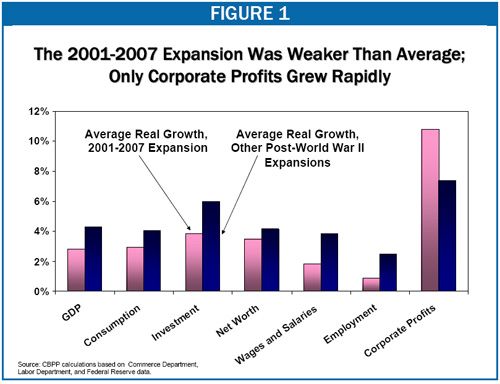
Is there some wealth redistribution going on in the USA. Yes there is. Corporate America is taking all the profits from worker productivity. Can we call it class war yet? Corporate profits are at an all time high; wages are at an all time low